
Before a vascular procedure in Pennsylvania, verify coverage for the scheduled date, identify the exact payer product, and check the surgeon and facility separately. Ask who handles authorization for the service at that site, then compare the payer’s response with the booking. Put the confirmation and the date of the next check in a record the scheduler and biller can both use. For a case that moves from a hospital to an office, repeat the site and authorization checks before carrying the old confirmation forward.

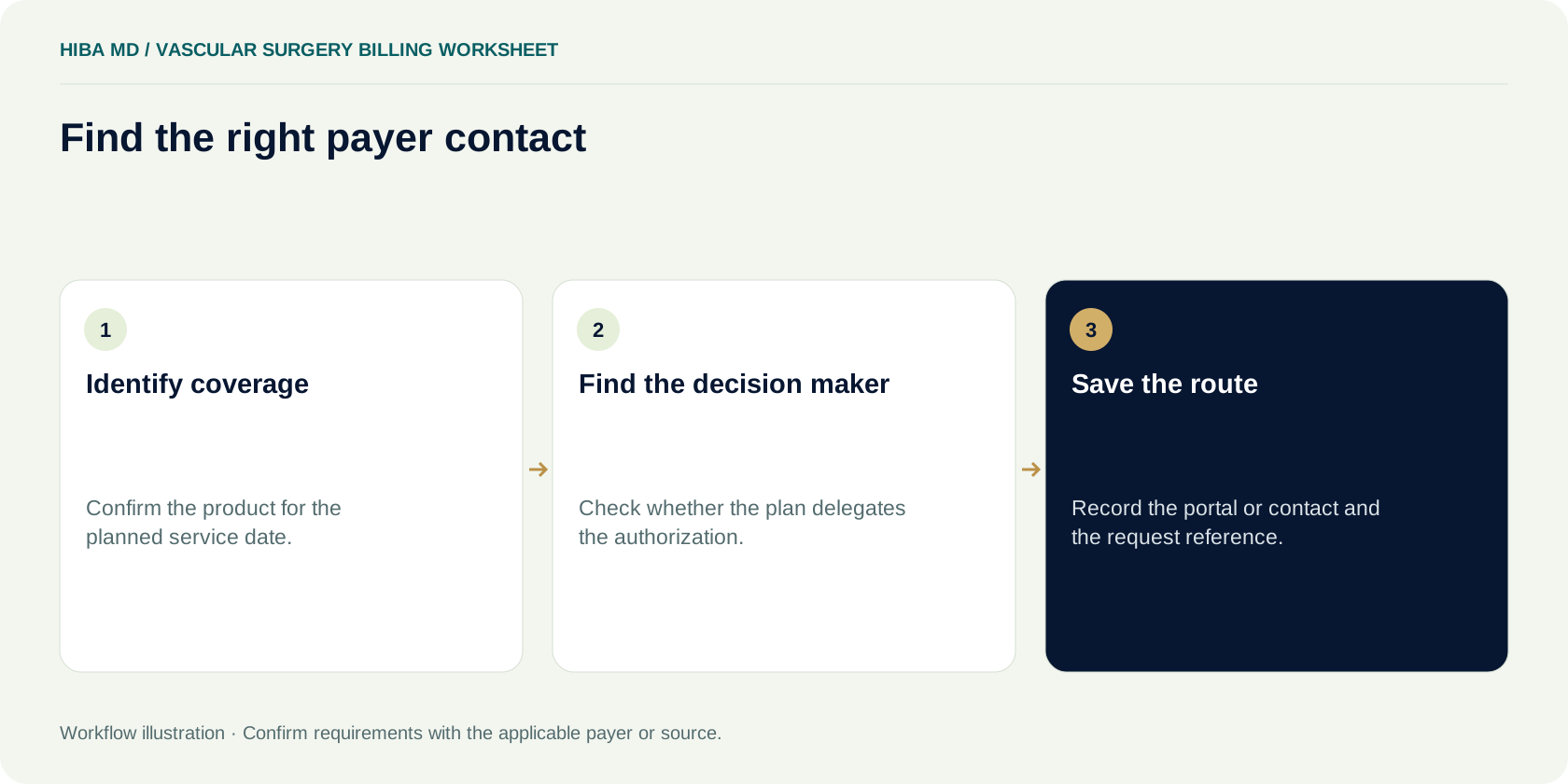
Start with the patient's coverage for the planned date
A surgical scheduler receives a referral on Tuesday and reserves a hospital slot three weeks later. The registration screen still shows the insurance the patient used at a consultation in spring. Before anyone sends an authorization request, open the eligibility response for the scheduled date if the payer makes it available. Identify the active product, who administers it, and which organization should receive questions about the planned procedure. A card in the chart is a useful search record. The date on an eligibility response tells the next person when the coverage was checked.
Keep the planned date separate from the date of contact. If the surgery is scheduled well ahead, set a repeat check near the case date and after any change reported by the patient or facility. A case booked across a month boundary deserves a second look when the team has reason to expect a coverage change. Avoid promising the patient that a preliminary response settles the eventual claim. The individual benefit, the site and the provider arrangement may still need review.
Save the source reference and the product on the scheduling worksheet. If the payer response lists another payer, assign a staff member to verify which coverage is responsible and what coordination steps apply. Give that person the actual date and procedure family they need to research. A queue entry that just says “insurance issue” will usually require someone to reopen the case before they can make a useful call. If the coverage cannot yet be verified, name who will follow up and set the next review date.
Choose the right Pennsylvania payer route
For Pennsylvania Medical Assistance, start with the Department of Human Services guidance on ACCESS Eligibility Verification System, often called EVS. Read the relevant response for the planned date and check the member's applicable enrollment information. If the response points to managed care, contact the actual plan for its provider instructions. Use the applicable Pennsylvania process when fee-for-service applies. Record which route the team checked. It should be possible to tell whether a saved reference came from the state eligibility system or from a plan answering a separate benefit question.
Medicare also needs a product check. Determine whether the patient has Original Medicare or a Medicare Advantage plan for the relevant date. CMS describes the HETS 270/271 eligibility transaction for Medicare eligibility information. For Medicare Advantage, use the member's plan instructions for benefits, network status and authorization. If the same benefits team handles both, give the scheduler a field for the exact product and a source for its verification. Keeping that detail beside the case can prevent a default payer mapping from sending the wrong request.
For commercial coverage, confirm the actual product and the contact for the service. A carrier logo can appear on several products with different networks or delegated administrators. Ask the plan whether it handles authorization directly for the proposed procedure and site. Save the answer so the submitting team can tell who owns the decision. If the plan directs the office to another organization, record the organization and the referral or case reference. Have someone check that the next organization can find the request before the case is treated as submitted.
Read the Pennsylvania ACCESS EVS FAQ
Verify the surgeon and facility independently
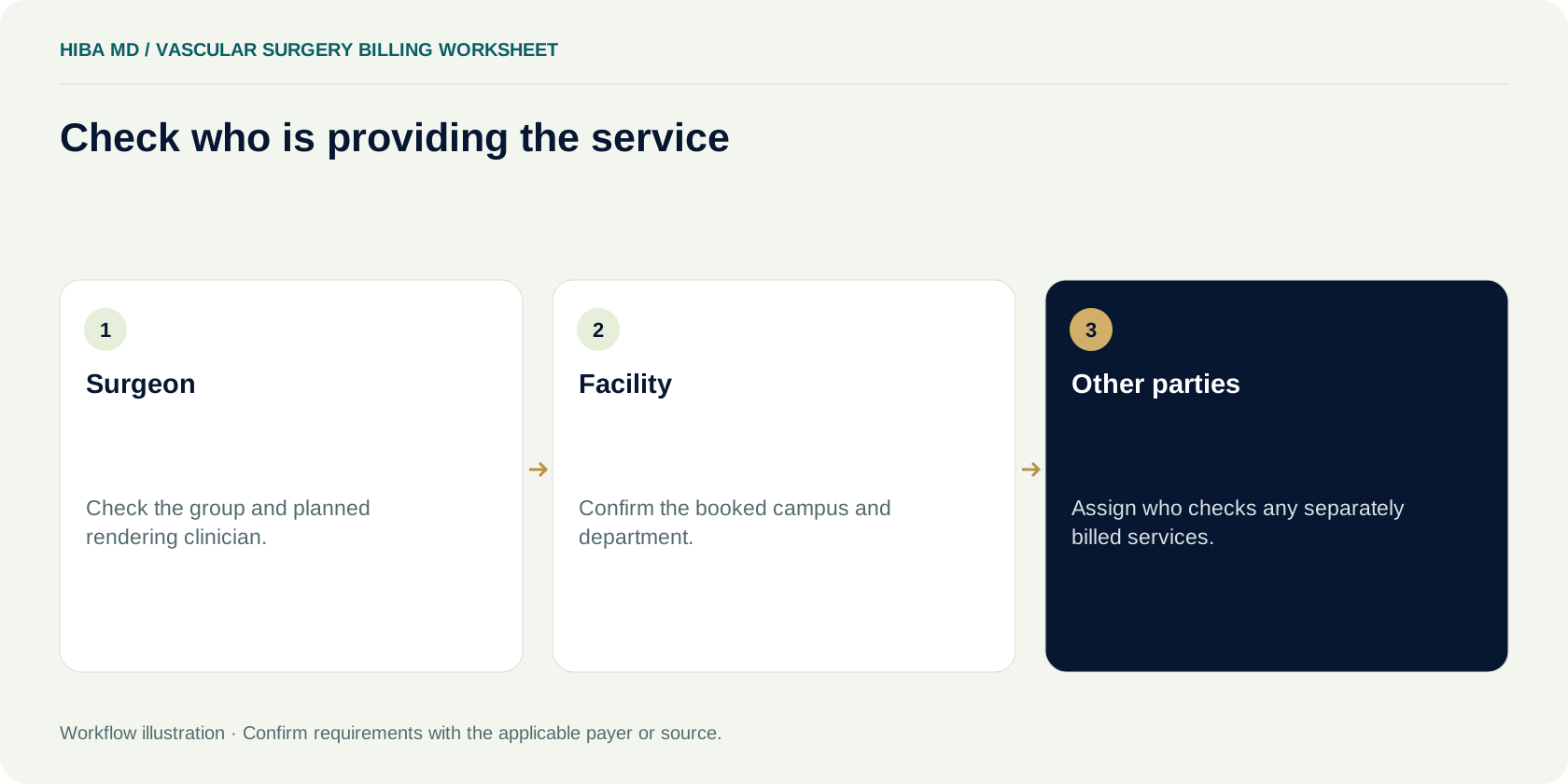
Write down which surgeon will furnish the professional service and which facility will host the procedure. Check the participation of each under the member's product, using the verified service location and billing entity. A group that has two offices may have different applicable arrangements across them. Ask the facility team which site and department it is booking and who will verify its own claim responsibilities. Where separate services may be involved, agree who will identify those parties and check the applicable plan instructions.
For example, a fictional clinic schedules a case at a hospital whose participation is confirmed. The patient access specialist still needs an answer about the surgeon's group for the same product and planned date. Ask about the specific billing arrangement and preserve the payer's reply. If the plan gives an answer for the group but omits the location, confirm whether the omission matters for the arrangement at issue. Put that question in the queue with an owner and an appropriate review date.
Changes can arrive from either side. The surgical group may change the rendering clinician, or the facility may move the case from one campus to another. Let the team that receives the change flag it for recheck. A useful flag includes which field changed and where the new information came from. Avoid marking the entire file as verified after only one team answers. Clear the individual checks once the evidence supports them, then update the overall scheduling status.
See the vascular surgery billing guide for professional claim questions
Define the service before asking about authorization
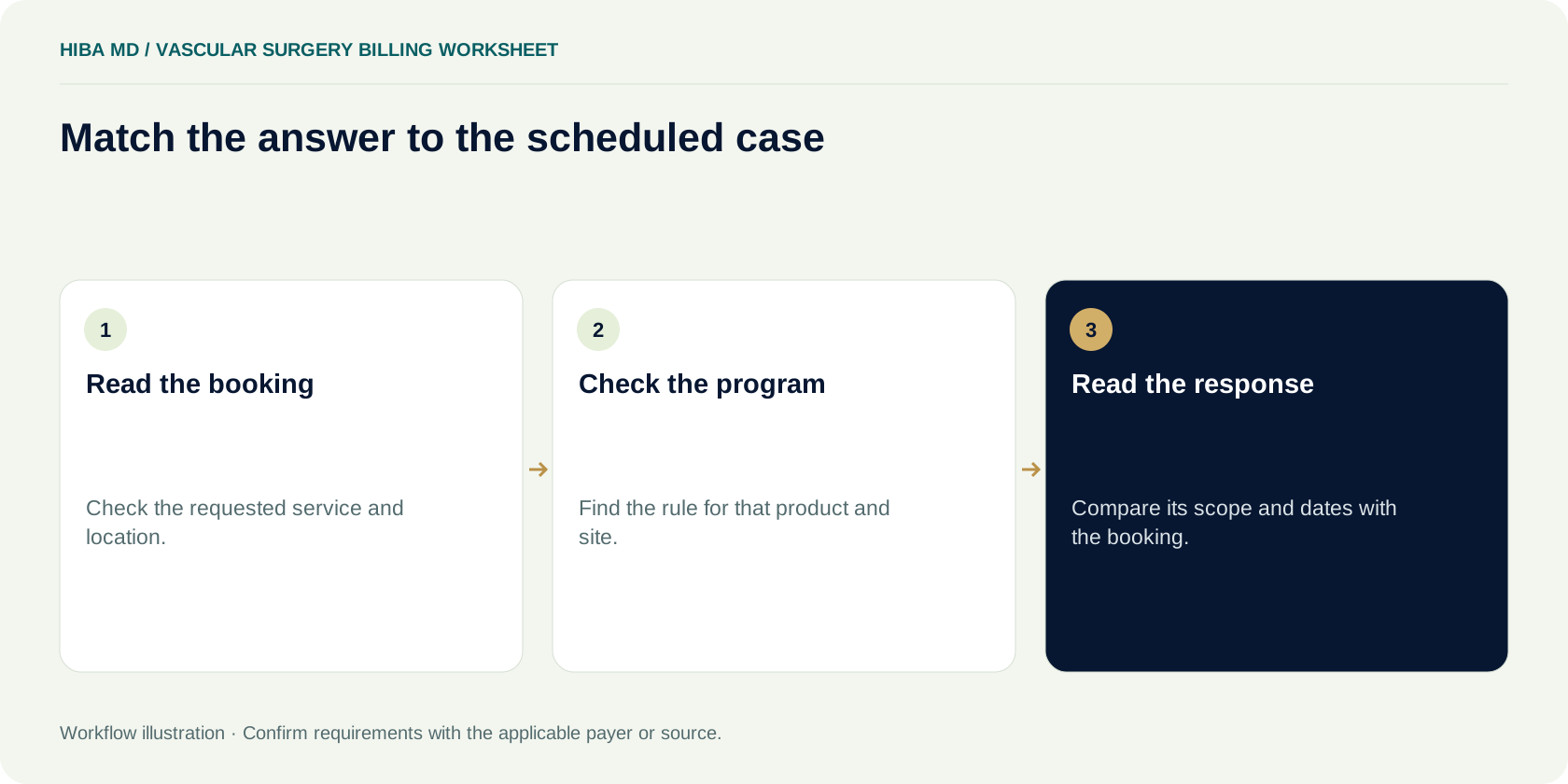
Have the scheduling team bring enough information to describe the case the clinician currently plans. Capture the planned procedure, laterality or site when relevant, planned setting, clinician and facility, and any expected staging. Use the clinic's approved workflow to obtain the appropriate documentation. The coding or clinical team should resolve an unclear procedure description. If the plan needs a procedure code, use the supported code from the authorized workflow. A person taking a payer call should have a source for the proposed service rather than guessing from a generic appointment name.
Keep three separate records. Retain the clinical plan, the administrative request sent and the payer's actual determination. The clinical record can change while a request is pending. A submission acknowledgment may precede a decision. The determination can describe a narrower scope than the original request. When the response arrives, compare it to the active schedule and the request. Record which version the review applies to so an earlier request is not mistaken for the latest decision.
If the plan says authorization is unnecessary, record how that answer was obtained and the facts supplied when asking. An answer for one procedure at one site may not cover a revised procedure or location. When an approval is required, verify its scope and any dates, site, provider, procedure or quantity limitations in the response. Ask the payer how to handle a change if the written records leave that unclear. The clinical team retains responsibility for the care decision. Billing and scheduling can give it a precise description of the administrative status.
Check the site-specific Medicare rule for vein ablation
CMS includes certain vein ablation services in its prior authorization program for hospital outpatient departments. Use the current CMS program materials and operational guide to confirm which services are in scope, what the submitting provider must do and whether an applicable exemption changes that workflow. Begin with the planned service and site. An office case, hospital outpatient department case and a case under a health plan may have different instructions. A rule attached to the hospital program gives the team a question to verify for the actual setting.
Ask the hospital contact who submits the request and where the vascular practice will see the response. Agree which supporting records the hospital needs from the practice and how it will request them through an approved channel. If the practice tracks the case in its own system, store a reference to the facility's confirmation rather than copying an assumed outcome into the charge record. Decide who will verify that the relevant authorization information is available before claim release and who will handle any return for missing information.
A staged treatment plan creates another handoff. Track each planned date and the documented approval that applies to it. Before booking or releasing the second case, consult current instructions for that service and confirm whether it needs a separate request or decision. The office should be able to identify the original request even if the patient later reschedules. Keep the procedure plan and returned approval linked to the relevant case instead of carrying a single authorization status on the patient's profile indefinitely.
Walk through one hospital case and one office case
Use these fictional examples to test a scheduling worksheet. Case VS-014 is an outpatient vein procedure scheduled at a hospital on December 3. The patient has Original Medicare in the training scenario. The practice confirms the scheduled date and facility and records the rendering clinician and billing group. The hospital checks whether the procedure and setting fall under the applicable CMS prior authorization program and identifies who owns the request. The practice gives the hospital the needed records through its approved process and sets a follow-up date for the decision.
In this example, the hospital sends a receipt reference Wednesday but has yet to receive the determination. Label the case “request received” in the worksheet. Name the person who will obtain the decision and document when they will check. If the clinician's office needs to discuss the unresolved status with the patient, provide the facts the team has verified and the next time it expects to have an update. Once the decision arrives, compare its scope with the current schedule before changing case status.
Case VS-015 is a fictional office procedure under a commercial plan, expected the same week. The scheduler verifies the actual product and asks the plan about the office setting and provider arrangement. The practice's own coordinator handles the request under the example plan's instructions. The same worksheet can capture this case, but the source for the route and the person who submits differ. Ask a new scheduler to open both rows and name the person holding the next action. If both rows read “vascular auth pending,” add enough detail to make the correct handoff possible.

Recheck the case when it changes
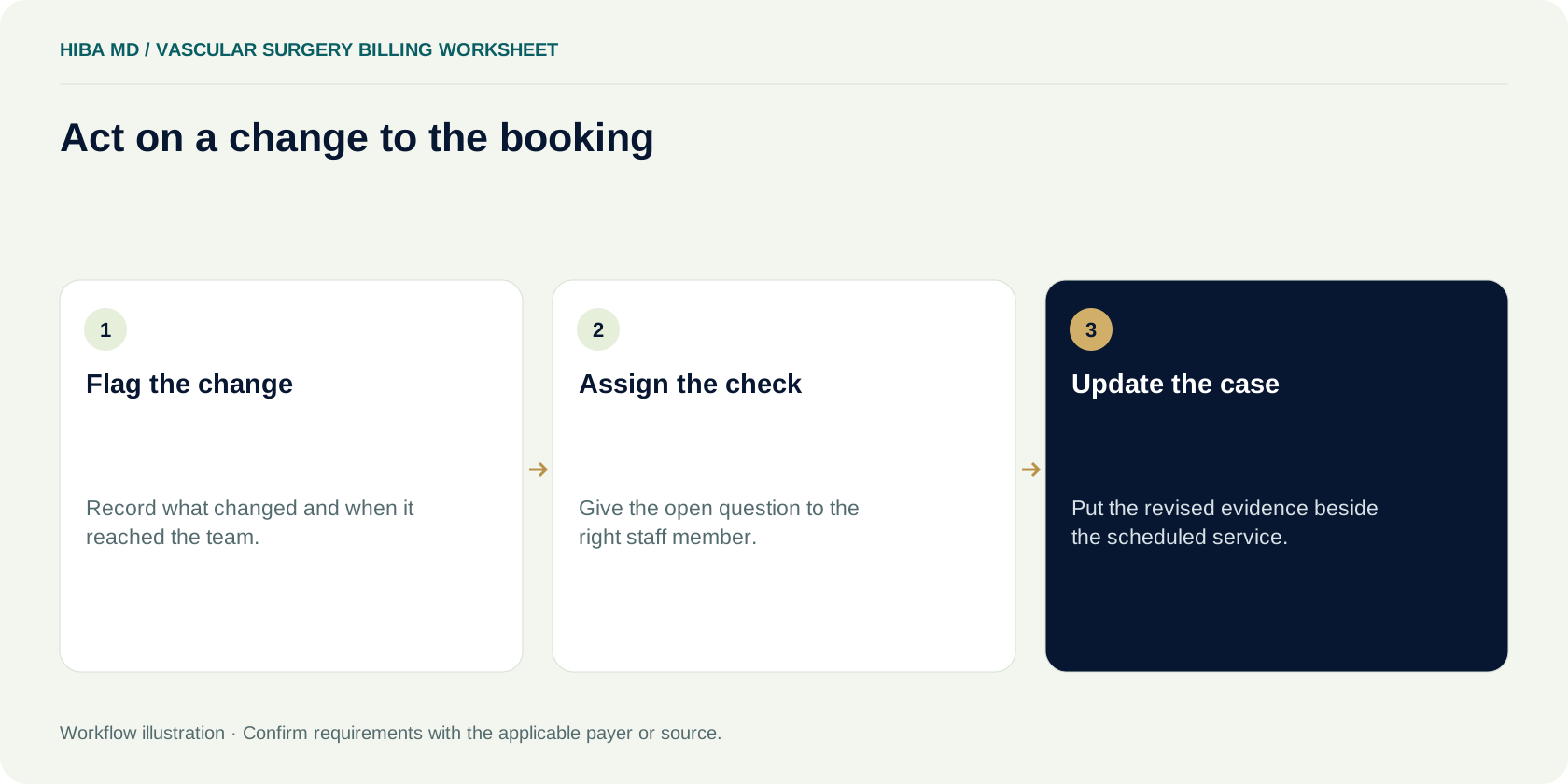
Record changes that can affect the verification. A new date may fall outside an approved window. The planned site or rendering provider may change. The clinician may revise the procedure after reviewing an updated study. Even a change that seems small to a scheduling team can affect the facts sent to the payer. Have the person recording it identify the previous and proposed values and send the case to the person who can verify whether the approval applies.
A fictional case is moved from December 3 to December 10. The procedure and surgeon remain the same. The practice retrieves the original decision and checks the new date against any limits. It also rechecks service-date coverage and asks the facility to confirm the new slot. If the authorization response applies only to the original schedule or the payer needs more information, keep the updated case in review. Save the original and any later confirmation so a biller can explain the timeline after the procedure.
Try the same exercise for a location change. The practice has an approval listing the outpatient department, but the schedule shows a different facility. Ask the payer or responsible entity what steps it requires before relying on the old response. If a new request is needed, attach the earlier record for context without replacing it. Give the scheduler a short dated status and a person to contact. The detailed evidence should stay in the approved record, available for the next person who needs to review it.
Track payer decisions and scheduling changes with the free authorization tracker
Reconcile the completed case to the verified plan
After the procedure, compare the completed record with what the team verified. Identify the actual date, site, rendering provider and supported service. Review any difference from the planned case before releasing the claim. Give coding the actual operative or procedure documentation in the approved workflow. The biller can check whether the authorization reference and provider details align with the claim. If the completed service differs from what the payer reviewed, check how the payer handles the discrepancy before selecting a route.
A good release note says what was examined and what remains open. In an illustrative case, the operative record confirms a December 10 procedure at the approved site. The schedule originally showed December 3. The later authorization response covers the new date under the example plan, and the release reviewer links that response with the completed record. Another line in the same encounter still has a documentation question. Give that question its own status and owner so a batch release does not hide it.
After transmission, follow the claim to a verified response. If it is rejected before adjudication, examine the payer or clearinghouse edit and follow the applicable correction instructions. If the claim is denied after adjudication, compare the remittance, the actual claim and the authorization or benefit evidence before deciding what to do next. Keep the submission and decision references. Set a review date for any applicable filing or appeal deadline and preserve the facts that support the timeline.
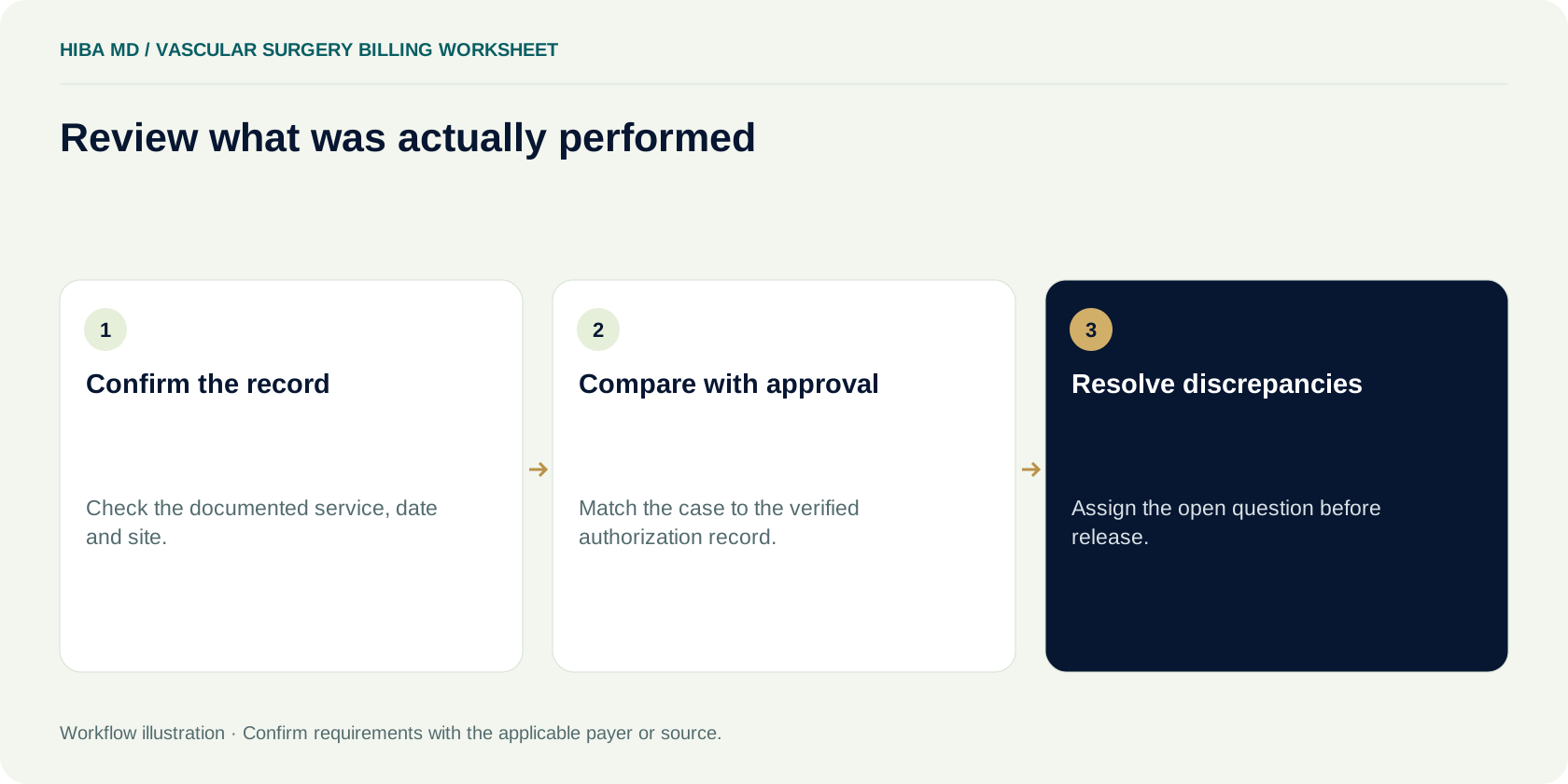
Make the worksheet useful when the regular scheduler is away
Give the worksheet enough structure that a backup can work from it. Use one row per case or staged procedure date. Keep a case reference, last verification date, scheduled service date, payer product, provider and facility fields, and the person assigned to the next check. Record the procedure scope and decision reference in a place the practice can audit. Display an abbreviated status for scheduling while keeping sensitive supporting records in the appropriate system. Use fictional data in any training copy shared outside that system.
A row should tell staff what is ready and why. “Facility verified Monday through plan portal, surgeon participation open with provider services, response expected Wednesday” gives a backup more to work with than a single pending label. If the same case needs an authorization decision, add that as a separate item, with its own owner and source. Staff can then resolve the provider question without accidentally closing an unrelated request.
Test the worksheet in a short handoff meeting. Ask one scheduler and one biller to reconstruct the status of the same fictional case. The scheduler should find the next update and know who can answer a patient question. The biller should find the authorization record and see which claim fields need review. If they disagree about when the case is ready, trace the disagreement back to a named field or instruction. Update the worksheet while the example is fresh and repeat the review on a case that takes a different route.
Test the worksheet with a case that somebody else handled. Give a backup scheduler the exact booking date and ask them to find the payer reference, the current location and the outstanding decision. If the person has to call a coworker to learn which request is still open, add a field for the request status and a link to the saved response in your approved system.
Use the next week's cases to catch repeated problems
Review upcoming cases that have an unresolved product, participation question or payer decision. Sort by the next date when someone needs to act. A case scheduled later this week can require attention before an older item if it still lacks a decision. A claim with an approaching filing deadline deserves its own escalation, even when the procedure took place months ago. Keep these deadlines beside the work so a general scheduling meeting does not bury them.
Record recurring problems in categories that can lead to a change. If three cases were moved between sites after the first review, check whether the practice gets facility change notices in time. If a group identifier is often missing, ask which record is supposed to supply it. Have someone compare expected and actual outbound claims after an interface change. A report of zero denials does not tell you how many cases are still held before filing. Keep pre-service holds, submission issues and adjudicated denials in their own measures.
Use a small sample to see whether the change worked. Pick an Original Medicare hospital case, a plan-managed case and a case that changed dates. Ask each owner to show the last verified record and say what happens next. If the clinic's goal is faster decisions, compare the number of scheduled cases with unresolved administrative questions at the same point before surgery. If the goal is fewer authorization denials, use a defined adjudicated claim or line cohort. Write both definitions down before comparing one month with another.
Keep useful evidence without collecting extra paperwork
Decide where the authoritative response belongs. A small team may use a work queue linked to an approved document system, while the facility maintains its own case record. Agree how to locate the relevant response without duplicating copies in email and shared drives. Give each role only the information it needs. For a billing audit conversation, bring aggregate counts, descriptions of the handoff and a fictional walkthrough unless an appropriate process has been established for sharing real records.
When the payer gives an answer by phone, record the date, product, service and scope asked about, plus the reference it supplies. Follow up through the approved route if the team needs written confirmation or if later instructions conflict with what was recorded. Take care to preserve exactly which date and site were discussed. A note that compresses a conditional answer into a blanket approval can leave the reviewer guessing about the conversation.
Close each exception with the source that resolved it. A corrected eligibility response may answer a product question. A payer decision may show the approved service. A confirmed facility record may establish where it took place. Give a reviewer enough detail to check the actual claim and record the remaining uncertainty if one piece is still open. Revisit the form when staff routinely copy the same data into several columns. A shorter worksheet with a reliable link to the right record can be easier to maintain.
Record the patient communication and the next check
The person who speaks with the patient should have the same case status the scheduler sees. For a fictional case where the hospital has confirmed its participation and the practice is still waiting on the surgeon's product-specific answer, tell the patient which question is open and when staff expect to update them. Write down what was communicated so the next caller can pick up the conversation. Route any clinical concern about time or continuity to the appropriate clinician. Keep the explanation about insurance grounded in the information the practice has actually verified.
If the patient asks about cost, identify who can provide an estimate and which services it includes. A professional estimate may cover only the surgeon's bill, with the facility providing its own information. Record which entity supplied each figure, the assumptions used and the date it was prepared. If the location or product changes, review whether the estimate should be updated along with the verification. Keeping the status note and estimate separate helps staff explain both the service arrangements and the remaining administrative questions.
End the call with a clear next step. The practice might plan to check the portal on Wednesday, follow up with the hospital on Thursday and call the patient once the site is confirmed. Assign each action in the actual work queue. If someone changes the schedule first, make sure that change reaches the people responsible for the coverage and approval checks.
Frequently asked questions
Does active coverage mean the vascular procedure will be paid?
Active coverage is one part of the review. Check the benefit for the planned service, any network or referral rules, and applicable prior authorization. Payment also depends on the claim and the payer’s adjudication.
Where should we check Pennsylvania Medical Assistance eligibility?
Start with the Pennsylvania Department of Human Services ACCESS Eligibility Verification System guidance. Check the enrollment information for the planned date. Use the applicable plan’s provider instructions for managed care.
What should we verify when the surgeon and facility bill separately?
Confirm each billing arrangement under the specific product and location. Agree who answers the professional and facility questions, and record both responses with dates and references.
Does Medicare’s hospital outpatient vein ablation authorization rule apply at the office?
The cited CMS program is for certain hospital outpatient department services. Confirm the actual site and procedure against the current CMS materials. Then check the applicable instructions for an office case separately.
Should we recheck authorization after rescheduling?
Compare the new date, site and planned service with the payer response. If a field changed, assign someone to check whether the payer requires an update and record the result.
What goes on a vascular surgery verification worksheet?
Record the date, product, payer route, surgeon, site, relevant benefit and authorization answers, supporting references and the next action. Use your practice’s approved system for the record.
Sources and editorial notes
Written by the Hiba MD editorial team. Reviewed 2026-11-15. Worked examples use illustrative figures, not client results or performance benchmarks. This guide explains administrative workflows; check current payer requirements for claim-specific decisions.
