
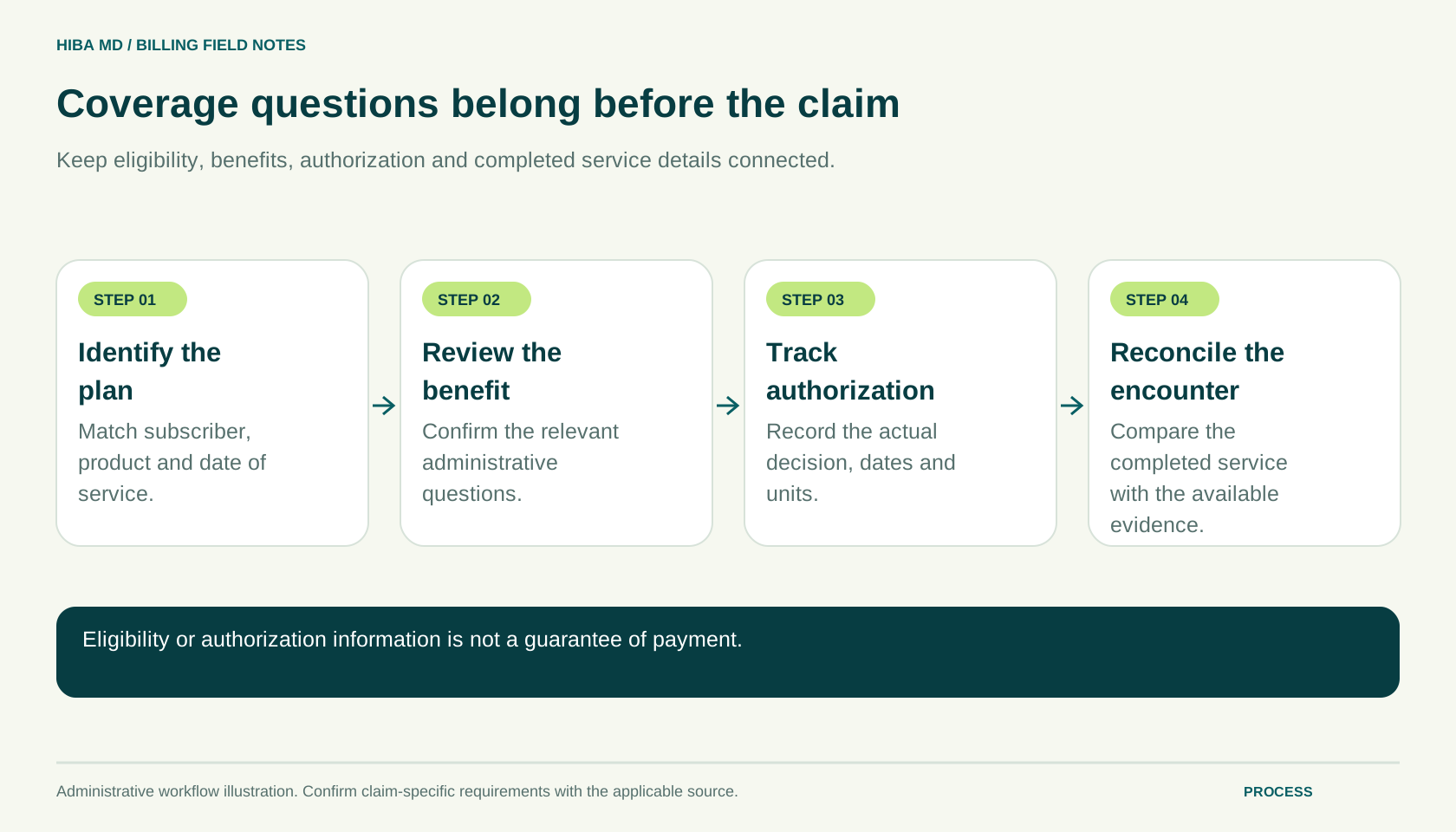
Eligibility verification and prior authorization answer different questions. Eligibility review concerns the relevant coverage information for a person and service date. Authorization concerns a payer's review of a specified request under its process. Neither should be treated as a universal promise that a later claim will be paid. A reliable workflow keeps the evidence, service details, dates and responsible owner connected.

Start with the practical question
For practice administrators, the challenge is often a handoff: scheduling knows one detail, the clinical team knows another, and billing sees the mismatch only after submission. This guide explains how to organize those connections before and after the encounter. It provides administrative examples, not medical-necessity decisions or universal payer rules. Use the actual plan, current program resources and appropriate professional review for claim-specific requirements.
Distinguish coverage, benefits and authorization
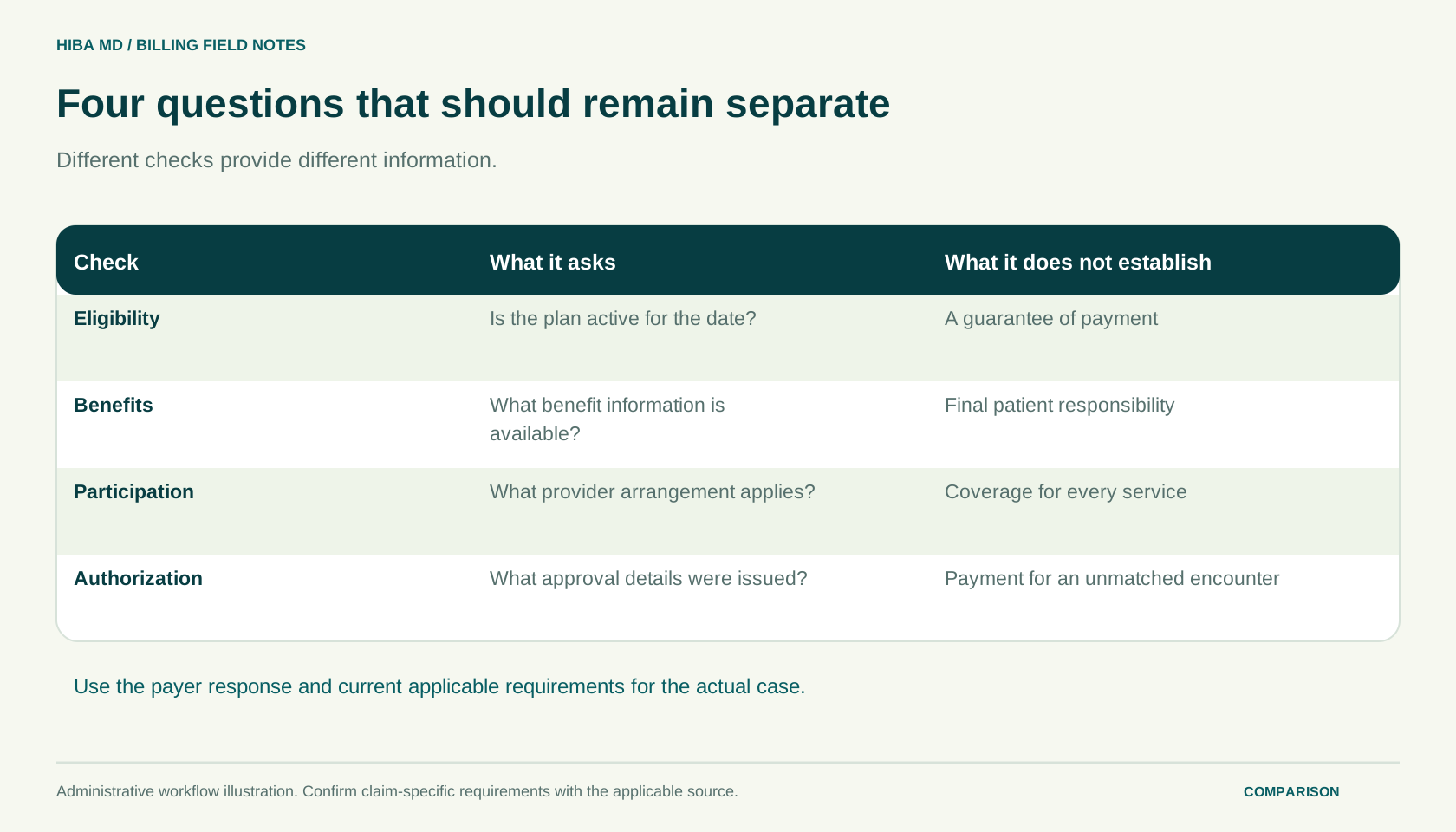
Write down the question each review is meant to answer. Is the team confirming coverage information for the service date, checking a service-related benefit question, determining whether a request must be submitted, or reading a response to an existing request? A single insurance-verified checkbox can conceal important differences between those tasks.
Keep the source and scope visible. An eligibility response may identify coverage information without resolving a particular benefit limitation. An authorization response may address a specified service without settling every claim-processing condition. Staff should record what was actually established and what remains unanswered. This allows the next team to use the information accurately rather than treating a preliminary response as a final payer decision.
For example, a patient may have active coverage while a planned procedure still requires an administrative review under the relevant arrangement. Conversely, a recorded authorization does not replace checking the service-date coverage information. A sound process treats the steps as related evidence rather than interchangeable approvals. The distinction is practical: each unanswered question needs its own owner, route and next action.
Identify the actual patient, plan and service date
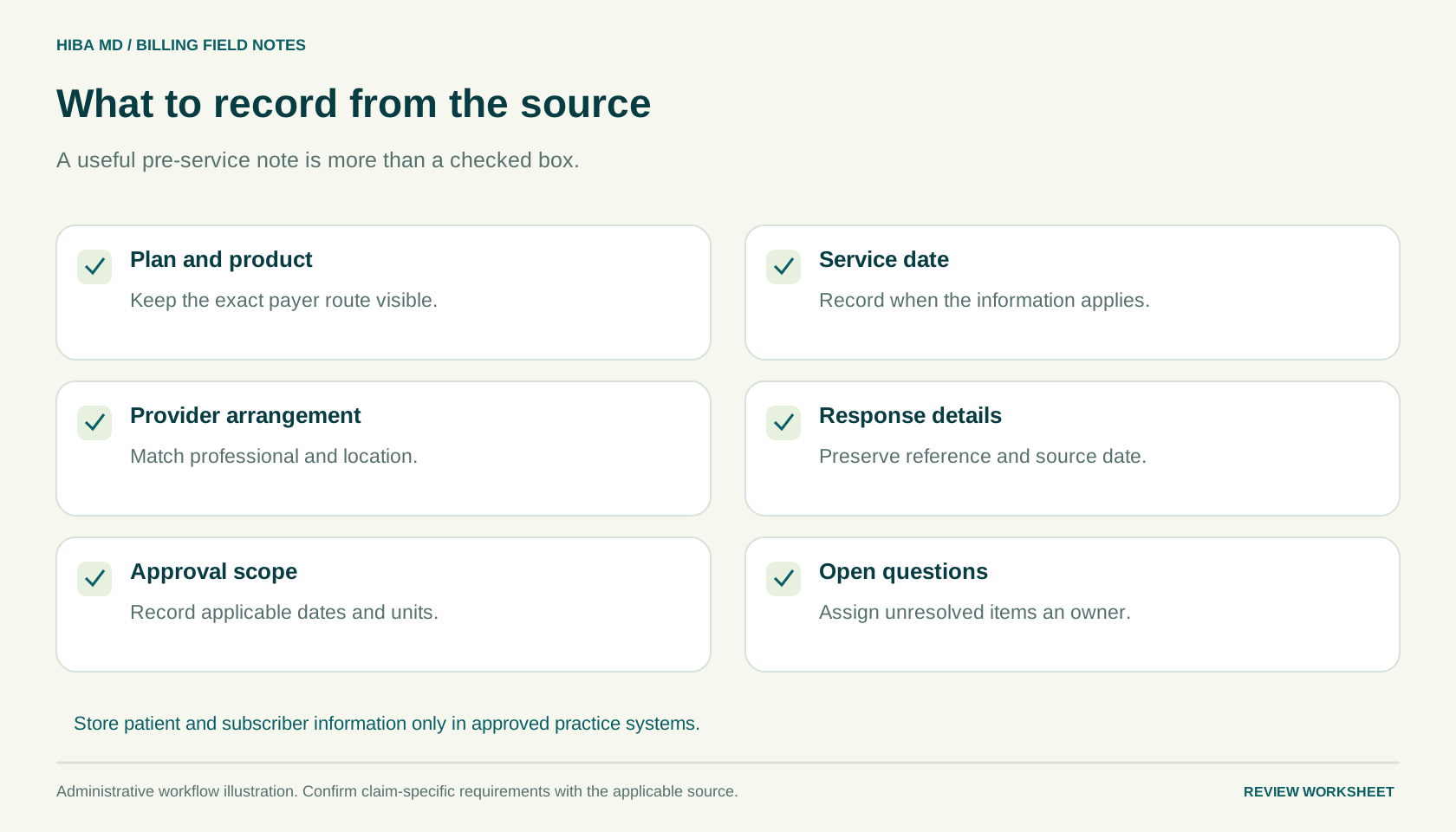
Start with reliable registration information. Confirm the patient and subscriber details, plan or product, relevant identifiers and the service date being reviewed. A payer brand may include different arrangements, so record the actual product when it matters to the administrative question. Keep the card information and the verified response distinguishable in the practice's record.
When coverage changes, determine which encounters and dates need review. Information that is current today may not establish the arrangement for an earlier service. Similarly, a future appointment may require a later confirmation if the relevant facts change. The workflow should make date-specific questions visible instead of overwriting the history with the most recent coverage label.
An illustrative new-year appointment highlights the issue. Staff may have information collected in December for a January service, while the patient reports a plan change at check-in. The appropriate action is to reconcile the relevant evidence and update the administrative question for that service date. It is not enough to retain an old verified status without identifying which date and arrangement it described.
Use electronic eligibility responses within their scope
CMS describes Medicare's HETS as an electronic eligibility system using 270 requests and 271 responses. That is an example of a defined transaction used to obtain eligibility information through an authorized process. Your practice may use a supported system or payer interface for its actual arrangement. Staff should understand the meaning and limits of the response their system displays.
Record the query date, requested service date and relevant findings. If a response is unclear or incomplete for the practice's question, identify the appropriate next source rather than assuming the missing detail is favorable. A concise summary should link back to the original evidence in the approved system so another staff member can review what was actually returned.
Avoid turning a real-time response into a payment guarantee. A later claim still depends on the completed service, documentation, provider arrangement and adjudication. The operational value of eligibility review is better information and a clearer handoff. It is not the elimination of all uncertainty. That distinction should also guide patient communication and any estimate the practice provides through its approved process.
Review other coverage and payer-order questions
Ask whether another coverage arrangement needs to be considered and use the appropriate current source to determine the administrative route. CMS coordination-of-benefits resources explain how multiple payers can have different payment responsibilities. A practice should not infer the order solely from the order in which cards were scanned or from which payer was listed first in an old account.
Keep the service-date context and source reference with the review. An employer change, another coverage record or a program-specific question may require clarification. Assign that question to an owner who can obtain accurate information through the relevant process. Do not repeatedly submit a claim under alternating payer names without first understanding the underlying arrangement and the status of previous submissions.
For Medicaid-related questions, begin with the state program's official resources and identify the actual managed-care or other route where relevant. A federal state profile is a starting point, not a complete instruction for every plan product. The practice's internal reference should name the source used, the date checked and what it establishes so staff can recheck it when circumstances change.
Identify whether an authorization question exists
Use the current payer or program information for the actual service, provider, location and coverage arrangement. Do not copy a requirement from another plan because the procedure sounds similar. Also distinguish authorization from a referral, notification, predetermination or another administrative process when the source uses those terms. The team needs to know which question it is trying to answer.
Record the source and the date it was reviewed. A quick internal reference can help staff find the right starting point, but it should not become an unmaintained substitute for the controlling policy. If the practice uses a scheduling checklist, include a field for unresolved requirement questions and a route for escalation. Silence or an empty field should not automatically mean no review is needed.
When the answer is uncertain, identify who can clarify it and when the practice must make its next operational decision. The responsible clinician remains responsible for clinical decisions. Administrative staff can coordinate the requested information and payer communication without presenting themselves as deciding medical necessity or modifying the planned service merely to satisfy a billing workflow.
Prepare a request with supported information
An authorization request should describe the actual planned service and the relevant arrangement using the information the current process requires. Coordinate supporting records through the practice's approved workflow. If a required element is missing, identify the source owner rather than inventing a clinical detail or copying a rationale from a different patient's record.
Create a readiness checklist for the request: provider and location details, relevant service information, supporting documentation status, submission route and authorized reviewer where needed. The checklist should help staff identify what is ready and what remains outstanding. It should not imply that checking every box establishes approval or that the payer must reach a particular decision.
An illustrative procedural request may be waiting for a finalized supporting record while the appointment is already on the schedule. The useful action is to make that dependency visible to the responsible practice owner. A submitted-status flag cannot solve a missing-evidence problem. Keep the planned service, request status and operational decision separate so the team can coordinate accurately.
Track pending work with an owner and next action
Submitted, pending additional information, under review and responded are different stages. Define the statuses your team uses and record the actual source supporting each one. A request number is useful, but it does not explain whether the payer is waiting for something or whether the practice must take another step.
For each pending item, record the reference, outstanding question, responsible owner and next review date. If additional information was requested, identify exactly what is needed and where it must be sent. If the payer confirms that review is ongoing, record that finding rather than repeatedly creating a new request without understanding the existing one.
Use a management view to identify dependencies before appointments or other milestones. A group of requests waiting for the same practice document may need a workflow change rather than more follow-up calls. Another group may need clarification of the correct submission route. Tracking the reason for the pending status helps the administrator allocate effort to the action that can actually move the work.
Read the response for scope, dates and limits
When a response arrives, review the actual document rather than relying on a single approved or denied label. Record the service scope, provider, location, valid dates and limits relevant to the arrangement. Keep the original response available in the approved system so scheduling, administration and billing can refer to the same evidence.
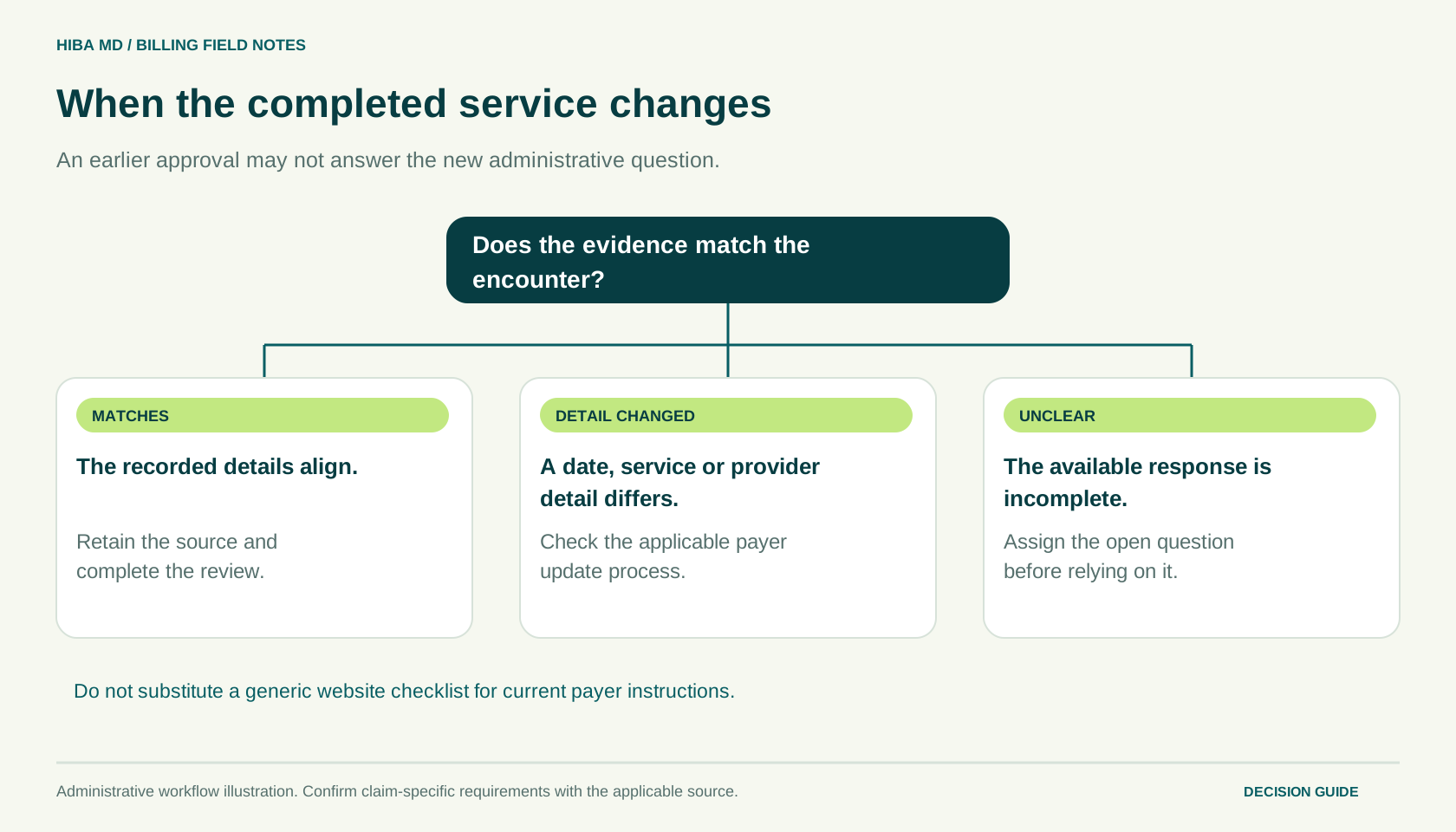
An authorization reference can be associated with a narrower request than the team expects. If the completed service differs from the response, identify the exact difference and consult the actual process. Do not assume that a reference number covers every related procedure, a different location or a later date. The administrative review should preserve the distinction between the request, the response and the encounter.
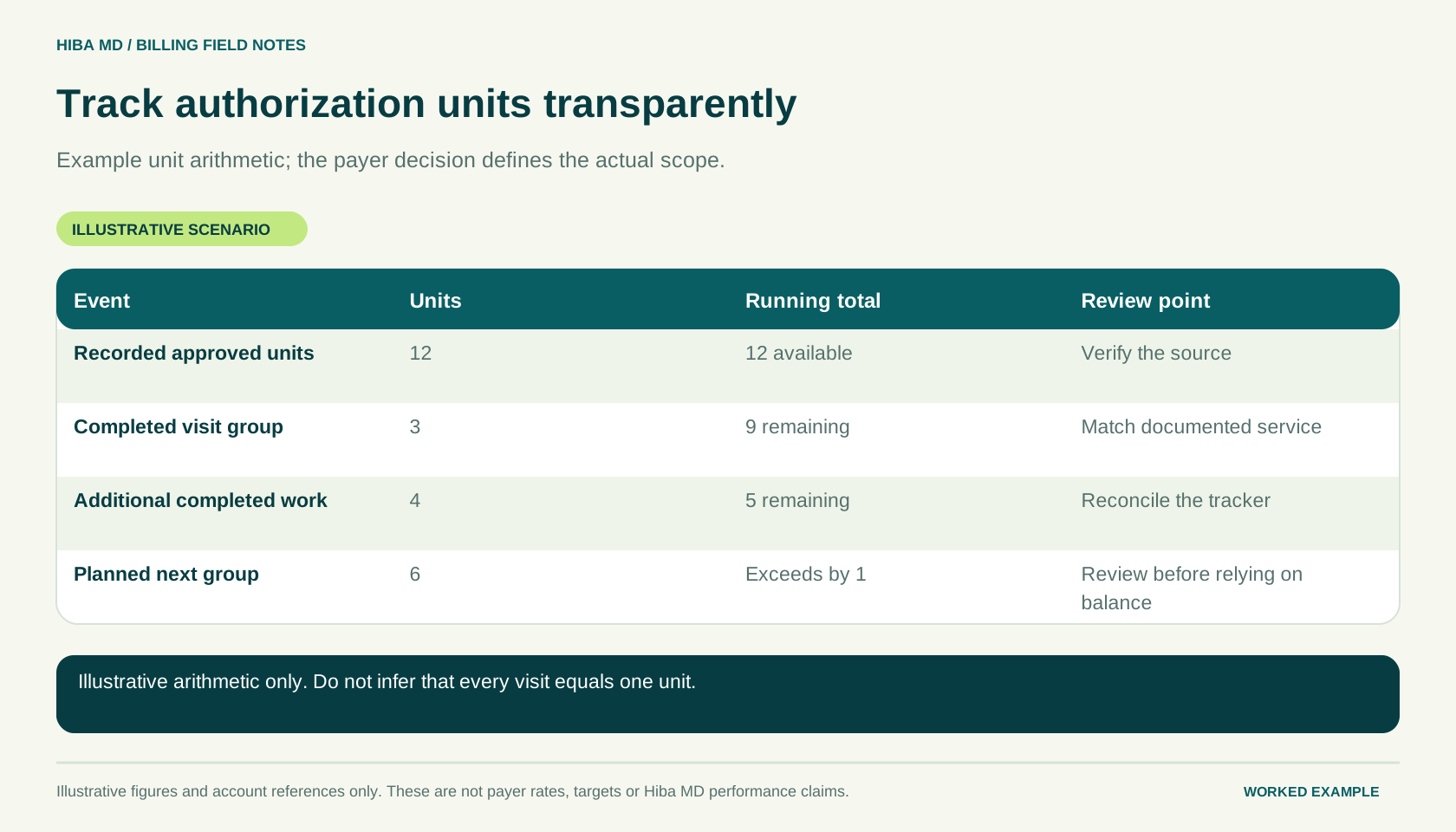
For an invented therapy example, 12 entered units with seven already used leaves five units by arithmetic. That calculation does not establish whether a specific visit fits the authorization, whether the units were recorded correctly or whether another limit applies. Use a tracker to organize the numbers, then use the actual response and qualified review to interpret their meaning.

Recheck meaningful changes before the handoff
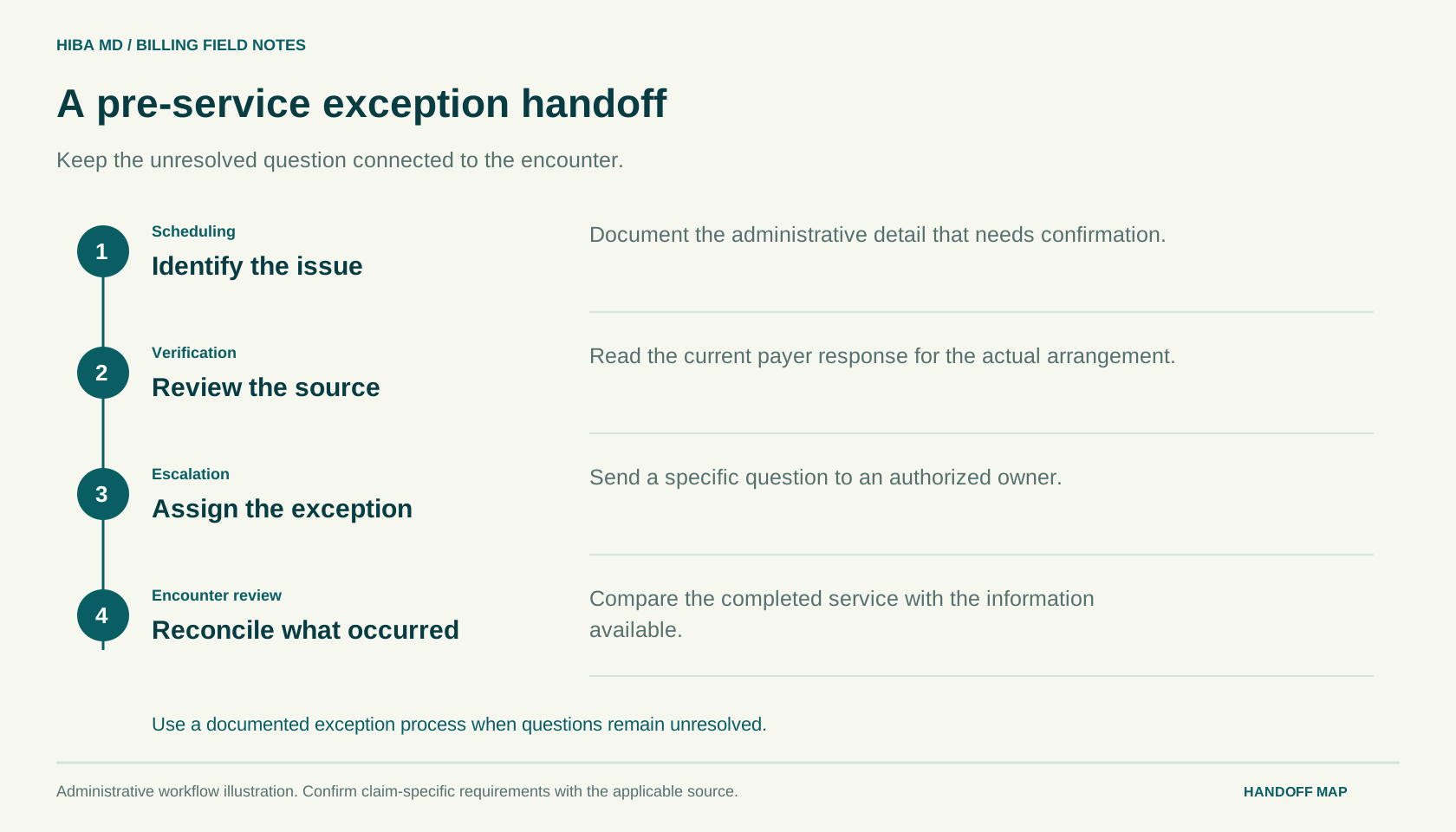
Changes in service date, provider, location, planned procedure or coverage can create a new administrative question. Establish how scheduling and clinical teams notify the authorization owner of those changes. An accurate response can become a poor reference if the underlying encounter changes and nobody compares the new facts with the record.
Use a change log that identifies what changed and what was reviewed. Staff should be able to tell whether the current appointment still matches the relevant evidence or whether clarification remains pending. Avoid overwriting the old service information without retaining enough history to explain earlier requests and responses. That history may matter if a later payer question concerns the sequence of events.
The objective is a reliable decision path, not an automatic stop or approval for every change. The applicable process determines what review is needed. The practice should identify who makes scheduling and clinical decisions while the administrative team supplies accurate status information. A clear handoff helps those decision-makers understand the unresolved question without a misleading assurance that all billing conditions are settled.
Compare the completed encounter with the administrative record
Before claim preparation, confirm that the relevant eligibility and authorization evidence can be located and compared with the completed encounter. The claim team needs the actual provider, location, dates and documented service information. A general scheduling note may not contain enough detail to resolve a mismatch that becomes visible only when the service is ready for billing.
Route exceptions to the appropriate owner. A missing response belongs with the administrative investigation. An unclear service record may need a documentation query. A coding question needs the responsible qualified reviewer. Do not change the documented service merely to match an earlier request, and do not treat an authorization as a substitute for the actual encounter record.
Keep the resulting action and source together. If the team confirms that the evidence matches, record the review under the practice's process. If it does not, record the unresolved question and the next step. That gives the eventual response investigator a useful history and makes it easier to understand whether a later issue began with the request, a change in the encounter or another part of the claim.
Communicate with patients without overstating certainty
Patient-facing staff should explain what has been checked and what remains pending using the practice's approved communication process. Avoid saying insurance will pay simply because coverage information or an authorization response is available. Those sources answer narrower administrative questions, while the actual claim will be adjudicated under the relevant arrangement.
When discussing a preliminary patient estimate, identify the information and assumptions used and the appropriate route for questions. An estimate, a benefit response and a final statement are different documents. The practice should ensure that staff know when to escalate a complex coverage or financial question rather than improvising an answer from a single screen indicator.
Keep the conversation respectful and specific. If a question remains unresolved, explain the next administrative step and the responsible contact. Do not ask patients to send sensitive records to a general marketing address or public website form. The clinical and financial teams should use the channels approved for the relevant information and keep the account history connected to the underlying evidence.
Review patterns after payer responses
If claims repeatedly raise eligibility or authorization questions, review the earlier handoff with a defined sample. Compare the initial information, request, response, changed encounter details and claim. Determine whether the recurring issue is missing evidence, a misunderstood response, an outdated reference or a communication gap between scheduling and billing. The final denial label alone does not establish the cause.
Choose one practical change and assign an owner. A clearer change-notification step may address altered appointments. A standard response summary may help staff see dates and limits. A dated source field may reduce reliance on old instructions. Review a later comparable group to see whether the intended exception changed, and explain any difference in payer or service mix.
Keep recovery work separate from prevention work. An existing adverse determination may need its own current inquiry, correction or appeal route. Improving the checklist for future encounters does not resolve the older account automatically. The practice needs both a well-owned response queue and a separate process for learning from repeated issues before they reach the claim stage.
Set a measurable, realistic operating review
Review counts by defined stage: requests awaiting practice information, requests submitted, responses needing clarification and encounters with unresolved matching questions. Define the population and starting event before measuring time. A turnaround calculation that mixes incomplete requests with complete submissions or different payer arrangements can create a misleading comparison.
Use an invented workload example to plan capacity. If 30 requests require review and the team can responsibly investigate six per day, five working days is a simple capacity estimate for that task under those assumptions. It does not predict the payer's decision or response time. Separate staff work planning from external processing expectations so management can see which part it controls.
Hiba MD offers a free audit conversation and one month of medical billing services free, with no conditions. Describe where your practice loses the connection between scheduling, authorization evidence and claim preparation. Aggregate examples can frame the initial discussion. Any detailed records should be reviewed only through the secure process agreed with your practice, with the actual plan evidence guiding the administrative next steps.
Use a date-and-quantity tabletop example
Create an invented response that names a service period and an entered quantity, then add a list of completed activity. Ask the team to calculate the remaining amount and identify which facts the arithmetic does not answer. It does not establish that the source quantity was entered correctly, that each completed activity belongs to the same period or that a changed service matches the response. This exercise makes the boundary between a tracker and the actual payer evidence easy to explain.
Next, change one fact: the appointment date moves beyond the recorded period, the location changes or the planned service is revised. Ask staff to identify the exact question and appropriate owner rather than automatically marking the whole record approved or denied. The current process determines what review is needed. A well-designed administrative workflow preserves the original request, response and changed encounter facts so the responsible person can investigate without reconstructing the sequence from scattered messages.
Finish by asking what billing receives after the service is completed. The claim team needs access to the actual response and documented service details, not only a scheduling note that says authorization done. Define the summary fields that help staff locate the evidence and recognize an unresolved mismatch. Keep patient-level details in the approved system. The training example can remain entirely invented while still testing whether the handoff gives the next team enough information to do its job responsibly.
Define the handoff when a response is unfavorable
An unfavorable response creates a new administrative question; it should not leave the request in an unexplained pending status. Identify what the response says, who needs to review it and which current process applies. The responsible clinical or other qualified professional should review matters within their role. Administrative staff can coordinate evidence and communication without making unsupported clinical conclusions or changing the service record to seek a different outcome.
Keep the original request, response and subsequent actions connected. If another review is pursued, retain the relevant source, destination and receipt evidence. If the practice makes an operational decision about the appointment, record it through the appropriate process and notify the teams that need the information. The request tracker should reflect the actual state rather than continue displaying submitted after a substantive response has arrived.
At the next management review, distinguish unfavorable responses awaiting a decision from requests genuinely awaiting an external response. Those groups require different attention. A clear status allows the administrator to ask the right owner for the right next step and prevents a generic pending count from concealing work that is ready for internal review. This improves the quality of coordination while leaving the actual service, coverage and review decisions with the people and organizations responsible for them.
Check whether staff can explain the status consistently
Use an invented request and ask scheduling, the administrative reviewer and billing to explain its current state from the shared record. Compare the answers. If one person interprets submitted as approved while another interprets it as awaiting review, the status language needs clarification. The exercise tests whether the same information produces the same understanding across the handoff, which is essential when several teams use a compact screen label.
Revise ambiguous labels with a source-based explanation. Identify what evidence establishes the status and which question remains open. The record should distinguish receipt, review, response and any subsequent practice decision. A longer label is not always necessary; a clear definition and accessible supporting response may be enough. The important point is that staff do not attach broader meaning to the status than the underlying evidence supports.
Repeat the exercise after a system or workflow change. A familiar-looking field may carry different information in a new interface. Confirm that staff can still locate the original response, identify relevant dates or limits and route a changed-encounter question. This is a useful training check because it addresses interpretation at the point where misunderstandings can travel from scheduling into a later claim investigation.
Frequently asked questions
Does active eligibility mean a specific service is covered?
Not necessarily. An eligibility response provides information within its scope and service-date context. A specific service may involve additional benefit, provider, documentation or authorization questions. Review the actual arrangement and current source rather than interpreting a general active status as a final payment decision.
Does prior authorization guarantee claim payment?
No. The response concerns the request and scope it actually reviewed. A later claim still depends on the completed service, documentation, coverage arrangement and adjudication. Keep the original response and compare its dates, limits and other relevant details with the actual encounter before making assumptions.
What should an authorization tracker record?
Include the request reference, provider and location, relevant service, current stage, response dates and limits where stated, evidence source, owner and next action. Keep patient-level information inside approved systems. A management summary can show aggregate pending work without copying sensitive records into a general planning file.
Can a calculator decide whether a therapy visit is authorized?
No. It can perform arithmetic on entered approved and used units or entered dates. It cannot interpret the payer response, verify the underlying records or decide whether the planned service fits the arrangement. Use the calculation as an organizing aid alongside the actual evidence and appropriate review.
What is the best first improvement for a disconnected workflow?
Identify one recurring handoff failure, such as changed appointments not reaching the authorization owner. Define the notification, responsible person and evidence location, then review a later comparable group. A specific tested change is more useful than adding a broad verified checkbox that leaves the underlying question unanswered.
Sources and editorial notes
Written by the Hiba MD editorial team. Reviewed 2026-10-31. Worked examples use illustrative figures, not client results or performance benchmarks. This guide explains administrative workflows; check current payer requirements for claim-specific decisions.
