
Before a diagnostic genetic test moves to billing, identify the specific test that was ordered, the entity that will perform and bill for it, and the coverage policy that applies. Give the laboratory a way to obtain the ordering record and any supporting documentation. Track the lab claim separately from a visit billed by the practice so a response on one account does not close the other.

Make the order identifiable
A referral can reach a billing team as a row marked “genetic testing.” That row gives a coordinator too little information to compare the order with a plan policy or a laboratory confirmation. Ask for the exact order as documented by the clinician and the name of the receiving laboratory. Record who can answer a question about the order. If the test has several versions, have authorized clinical or laboratory staff resolve which version the order specifies.
Keep the order and the record that supports it available in the approved system. A CMS fact sheet for Medicare fee-for-service laboratory documentation explains the evidence the submitting entity needs for the billed service and the documentation of intent to order. Review that guidance alongside the requirements that apply to the particular test. Agree who can retrieve the relevant record if the payer asks the entity that submitted the claim for it later.
Work out who owns the lab claim
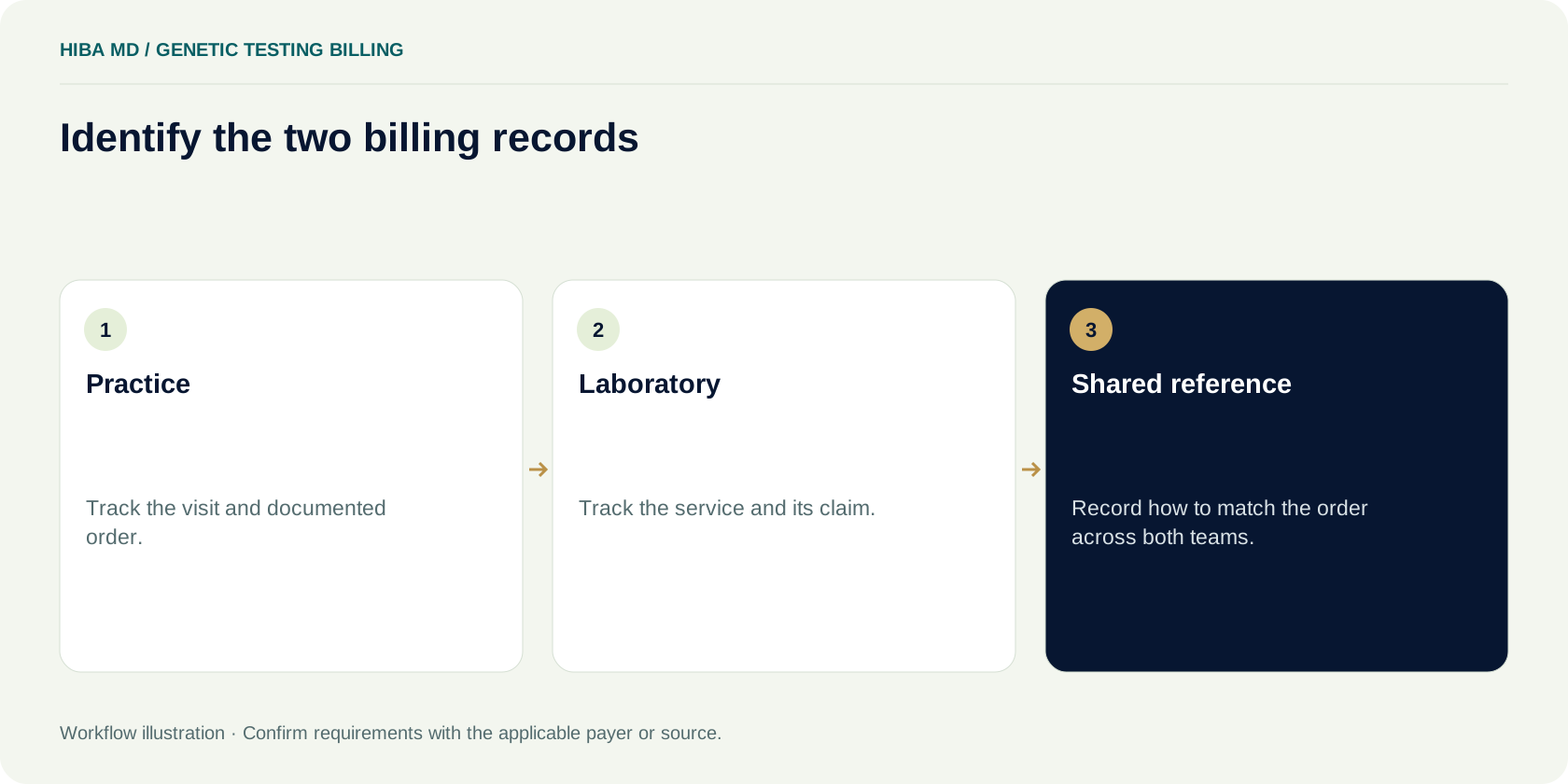
In a fictional referral, a specialty practice bills for its documented visit and sends the order to an independent laboratory. The practice sees a paid visit and the lab receives a request for records. Each organization follows the claim it submitted. The person asking for the notes should include the test reference and the applicable response date so the practice can find what was requested without having to identify a specimen or visit from memory.
Ask the laboratory how it will confirm that it received the order and which reference it uses when contacting the practice. The practice can close its outbound referral task when receipt is confirmed and keep a separate task open when it has promised to provide additional documentation. A receipt entry, a laboratory billing response and a practice visit remittance belong in their respective records.
Verify the precise coverage source
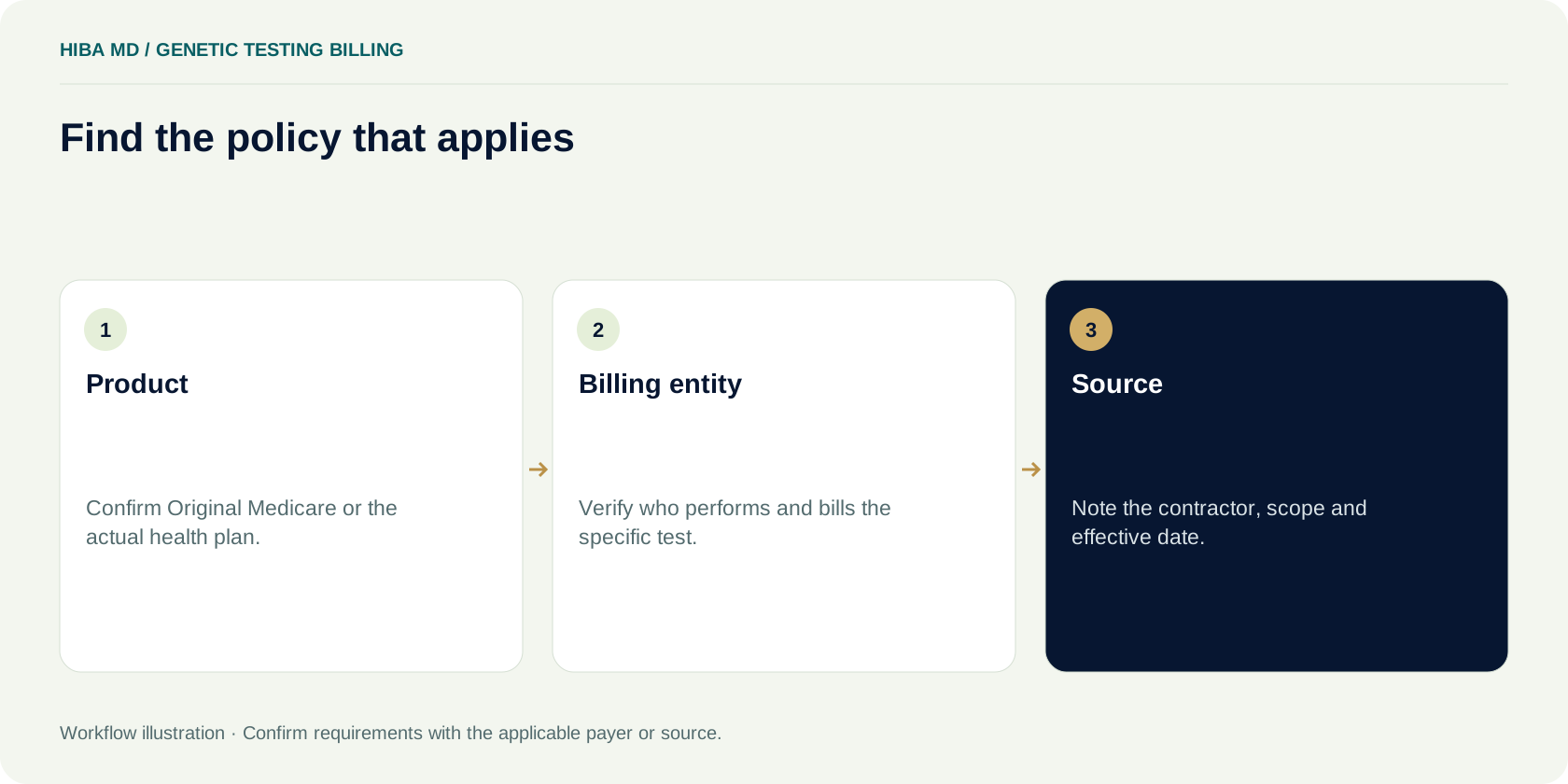
Start with the payer product and the entity responsible for the bill. For Original Medicare, determine the applicable contractor and find the active coverage document for the service. The Medicare Coverage Database holds national and local documents and linked billing articles. Confirm the jurisdiction and dates before using a document. A molecular diagnostic billing article tied to one local coverage determination should be evaluated within its stated scope. Search the actual test under review and retain the date and version of the policy used.
If the plan requires authorization, determine who submits it and what the returned decision covers. Track the exact test, the responsible entity and the reference. If a service or laboratory changes, check whether the original decision still applies under that plan. Assign the recheck to an owner with a due date so the new decision can be matched to the same referral.
Follow a returned claim or request for records
For a returned submission, the receiving organization should identify which claim data must be corrected and check the acceptance of the subsequent transmission. For an adjudicated denial, record the remark and reason from the payer response before asking the practice for help. An order question is easier to resolve when the request identifies the service the payer reviewed, the relevant date and the type of evidence it needs. Use the approved exchange process and save the confirmation.
Check which Medicare contractor applies in the Ohio example
For an Ohio practice, there can be two different checks at the referral desk. First, identify the plan the patient has for the services in question. Second, find out where the testing entity will bill. CMS lists Ohio and Kentucky in Jurisdiction 15 for Original Medicare Part A and Part B and identifies CGS as the contractor. The practice's address gives the coordinator a starting point when checking its own claim. Ask the laboratory to confirm the applicable jurisdiction for the claim it will send, particularly when work will be performed by a separate entity or outside the state. If the patient has a Medicare Advantage product, use the verified plan's provider documents for the relevant questions.
Save the source someone actually consulted. A copied reference to a coverage page may open years later at a different version. Give the next reader enough information to recover the applicable document by recording its identifier and the version or effective date used. If the laboratory has a different reference in its worksheet, compare the service, contractor and date each person looked up before asking anyone to change a form. Both could have found real policy documents whose scope differs.
Consider this fictional referral. A Columbus practice's coordinator knows the Ohio contractor used for the practice's Original Medicare professional claims, but the testing lab is a different company. The coordinator records that the Ohio practice and the lab are distinct billing entities and asks the lab to identify the contractor and policy that govern its intended submission. The practice still confirms its own visit workflow. The file now shows which party will answer questions if the payer requests the lab order later.
Record the source for the lab's coverage decision
The billing team needs enough detail to find the policy that applies to the billed service. Search by the service or test identifier used in the applicable payer material. Read what the policy says about its scope, then consult any related billing article for the claim information it calls for. A document with a familiar title may apply to a different test, indication, date or jurisdiction. In Medicare's Coverage Database, check the status and effective dates and read the listed contractor or geography before relying on a local document.
For a commercial product, ask the plan or its designated administrator which current medical policy and provider instructions apply to the exact test. A response from an authorization portal can tell a coordinator what to submit, while the policy may explain the review criteria. Preserve the reference for both if both were used. If the portal points to a third party, record the named party with the request status so the practice calls the right place the next time.
A useful review note says the source and date checked, identifies the service or test covered by the source and records the open question. For example, the entry could show that a service-specific policy was found but the practice is still waiting for the laboratory to confirm the billing entity. The person taking over the case can contact that entity using the existing record. Remove reminder tasks only once the question they represent has an answer and that answer is accessible to the person who needs it.
Check the order and the submitted service independently
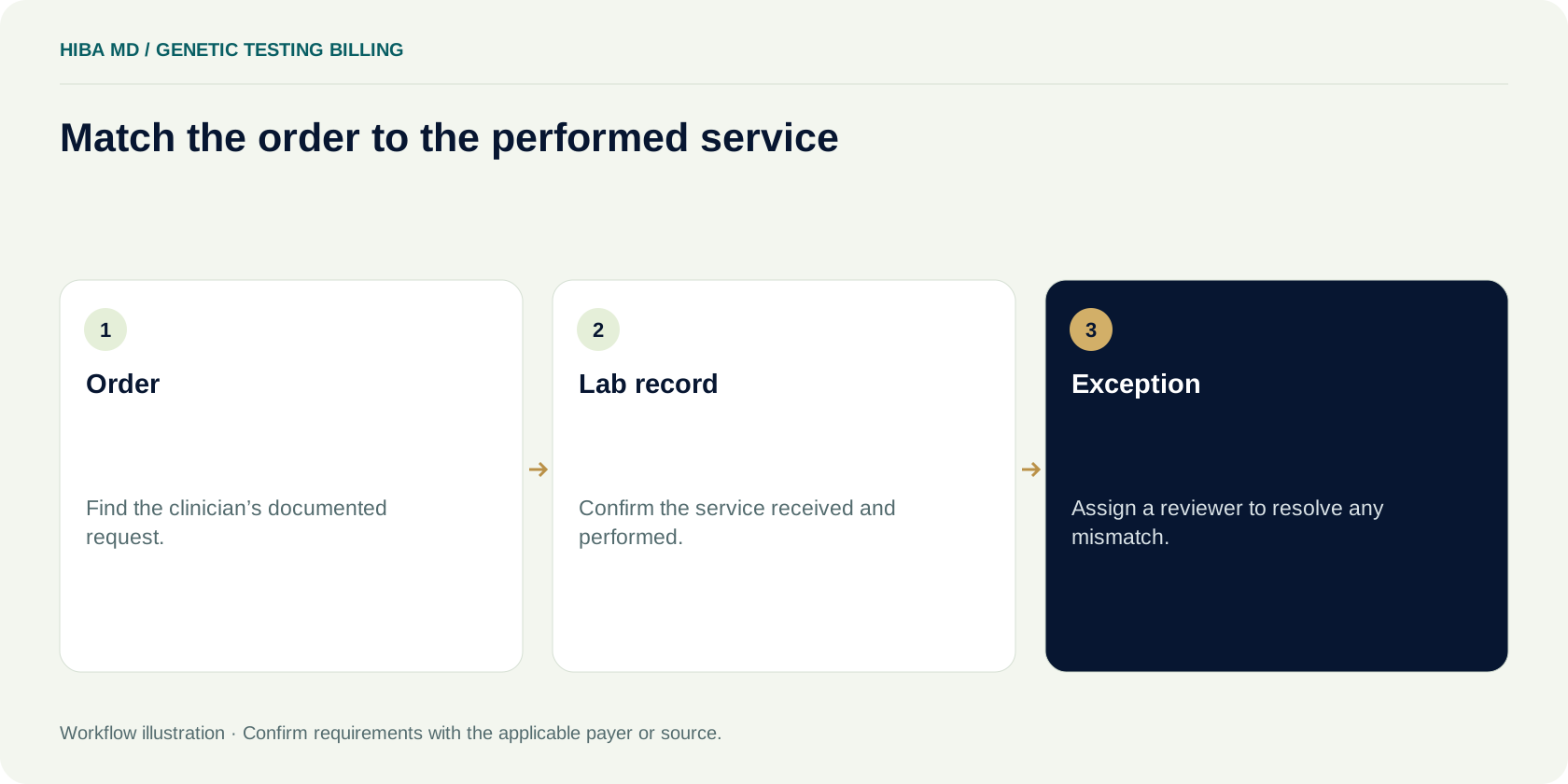
The office keeps what the clinician ordered. The laboratory keeps what it received and what its own records show it performed. At claim review, the documents should describe the same service or there should be an explanation for the difference. Compare the order reference and service name in the laboratory's acceptance record with the request in the practice system. If a difference surfaces before the claim leaves, send a question to the assigned owner and hold the affected billing item through the approved process until it can be reviewed.
A coordinator should be able to see whether a clarification changed the order or simply provided a more precise label for it. Ask the clinical owner to use the ordinary documentation process. Keep the original timestamped records and any appropriate subsequent entry. Billing staff can record the handoff and follow up on a missing reply. They should not select a different test on the order or infer a clinician's intent from the payer's decision.
Consider a fictional case in which the laboratory calls because its intake label could match two services. The practice finds the clinician's exact documented order and sends the clarification through its approved channel. The laboratory confirms which request it received before the case advances. If its response names a different service, the coordinator assigns the mismatch back to the appropriate clinical or lab contact and records when to check again.
Put the authorization decision beside the scheduled test
If a plan requires an authorization for the service under review, write down who owns the request and how the other party will see its disposition. A common breakdown in a referral occurs when the practice believes the laboratory made the request and the laboratory expects a reference from the practice. Use a named owner and record the evidence of submission. That is the information a backup coordinator needs when calling about an open request.
Read the response before marking a test cleared. Compare its scope to the current order and the organization's role. Check any conditions, approved dates and the way the payer identifies the authorized service. Label a receipt as a receipt and enter a date to look for the decision. If an approval is available, document where the laboratory can see it or how it was sent. Coverage and payment questions remain subject to the payer's adjudication and the documented circumstances of the claim.
In a second fictional case, a patient reports a plan change after the order was sent. The coordinator records when the change was reported and confirms which coverage applies to the service date under review. The laboratory contact verifies whether the new plan needs a new request. The office keeps the original response and records the new inquiry in the same referral record, so nobody mistakes an authorization reference from the earlier plan for the decision on the current case.
Respond when the lab changes after the referral
A change of laboratory can affect several parts of a billing file. Confirm the entity that will perform the service, who will bill it and whether the applicable payer instructions require any further approval. Compare the replacement lab's intake confirmation with the original order. Ask the party that opened the first request whether there is still an open task and how it should be resolved. Put that answer in the referral file with the new lab information.
Assume a fictional clinic sent the referral to Lab A. The clinic later learns that Lab B will take it. The first lab confirms whether any work began. The second lab confirms receipt of the order and checks its billing arrangements with the plan. A coordinator monitors the active referral under Lab B's reference and retains Lab A's cancellation or transfer details. When the payer response arrives, the team can tell which request and which entity it addresses.
If the two organizations expect different service dates, have them identify the source of each date and clarify how the relevant rule applies to the billed service. The scheduling date, collection date and other dates recorded by the practice or laboratory can describe different events. Sending a record that just says “date changed” leaves the other team to guess which event triggered the change. Name the event and document who supplied the correction.

Resolve a missing-record request
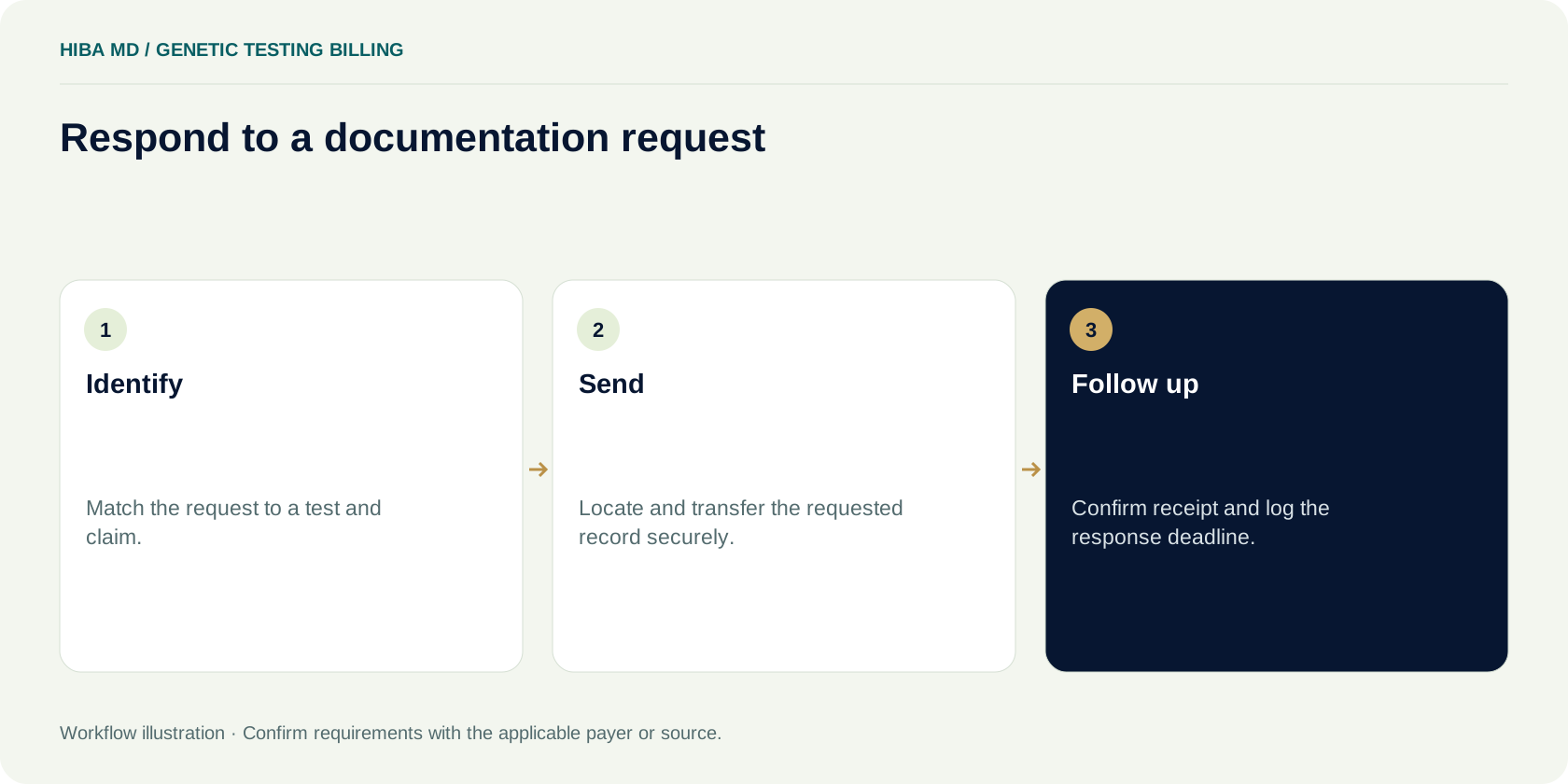
A payer may ask the lab for documentation that remains at the ordering practice. Identify the claimant and the exact record described in the request before transferring anything. Use the date, order reference and service to find it. Ask who can confirm receipt by the claimant or responsible reviewer and note the deadline for that action. If the deadline is approaching, follow the practice's escalation process and keep the staff member who is responsible for the reply visible on the task.
In a fictional request the lab has a requisition but needs the visit record supporting the order. The practice identifies the signed record within its usual system and sends the relevant material through the approved channel. The laboratory saves confirmation and submits the response using its applicable instructions. The practice marks its documentation task complete when the agreed recipient confirms receipt. The laboratory keeps tracking the actual claim decision until it arrives and has been reviewed.
If the payer returns a second request, compare it with what was sent and identify whether it is asking for a different document or raising a different question. Pull the original transmission receipt to establish what the other party received. Use the reference and document date to ask a focused question if the request is ambiguous. Keep the response date visible while the documentation owner investigates so the case does not disappear into a shared inbox.
Use a referral record that supports both teams
At minimum, a practice needs the order reference, test name, laboratory, applicable payer and next action. Record the date of the coverage check and the source. If approval is required, include the submission reference and the returned status, and identify where that result was sent. Add the billing entity and a practice contact for documentation requests. Keep credentials, notes and records in the approved systems. The worksheet should point back to the original source when more detail is needed.
The lab can use a complementary record. It can record the referral received, the billed service, the claim number and the current payer response. If a question arises, give the practice the minimum information needed to find its record and identify the pending action. The practice can record the exchange without marking its own claim as denied. The two entries will correspond through the referral reference and supporting communication.
Test the worksheet with a case that involves a change of plans or laboratory. Give a colleague the referral reference and ask them to locate the documented order, the most recent coverage check and the last acknowledgment. Ask which person will act next and by when. If the colleague has to search a personal email account to find the answer, review where confirmation should be stored and repeat the exercise with the next case.
Compare cases before changing the workflow
Review a few closed referrals after the practice and lab have used the handoff consistently. For each case, identify the first missing piece of information that required another call. An unclear laboratory name may come from a referral form. A missing order may come from a handoff that recorded transmission but failed to record receipt. An unclear policy may need a reference to the specific test and date. Use that evidence to decide which item to address first.
In a small fictional review of twelve referrals, four needed a second call. Two lacked a lab acknowledgment, one had a test name mismatch and one had a payer follow-up question. The practice can assign a staff member to verify receipt for each new order and then review the next twelve referrals using the same counting rule. The test name issue goes to the staff member who can see both sides of the order. The payer question can stay in the billing follow-up queue. This gives each team a job tied to what actually happened.
Measure what the team can check. Referral acknowledgment and claim resolution are separate events. A drop in missing acknowledgments is evidence that the referral handoff improved. If denied claims continue to increase, look at the denial reasons, service mix and open records before attributing the change to referrals. Record which cases were included in the review and when their claims were checked so the next comparison uses a similar basis.
Check the remittance before closing the billing work
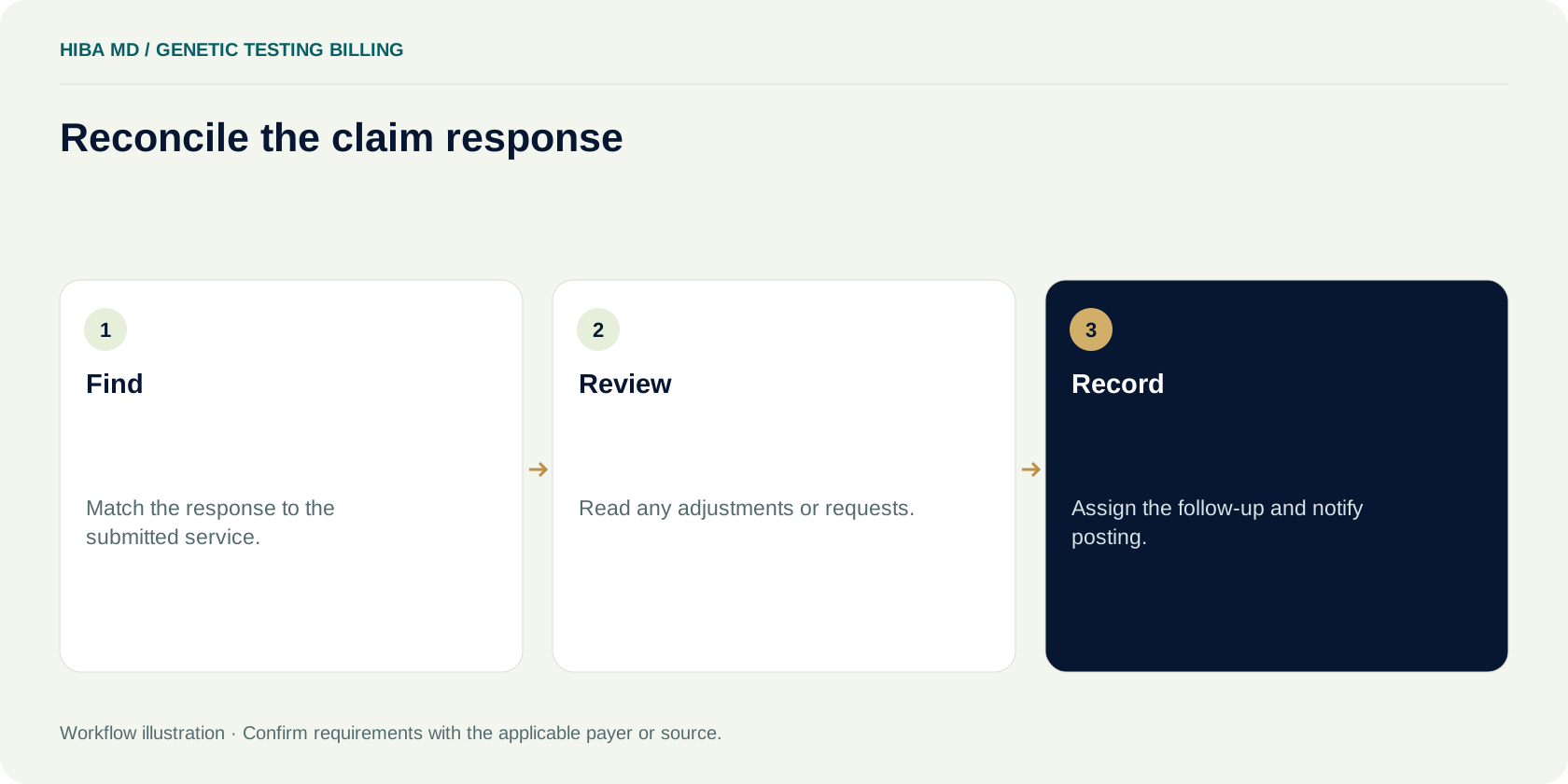
A laboratory can have a clean referral handoff and still receive a denial, a request for records or a payment that needs review. Find the submitted claim and the response that corresponds to it. Identify the line or service described by the payer and compare it with the billing record. If the question concerns a mismatched order, bring it to the people who can see what was received and performed. If the question concerns how the payer priced the claim, use the applicable rate source and remittance details before opening a variance.
In an illustrative batch, the practice's visit paid on Monday and the lab's test remained open on Friday. The laboratory had an intake reference, a claim number and a payer request for a supporting document. The practice had a chart note and a scheduled date for staff to send the requested material. When the laboratory later received its decision, it saved the answer on the claim and sent the practice a confirmation of receipt for the documentation. The office could finish its part of the handoff without treating the visit payment as an answer about the test.
A second contact is easier when the original note says exactly what was delivered. Keep the transmission date, receipt reference and resulting action. If staff enter the same question twice under different payer reference numbers, identify the two requests and choose one owner to coordinate the response. The billing team needs the outcome for each claim, particularly if an adjustment changes an earlier payment or a patient balance. Route that question to the responsible posting team rather than adjusting an account from the referral screen.
Give new staff a short rehearsal before they open real cases
Choose two closed referrals that illustrate different outcomes. The training version can use fictional identifiers and simplified facts. Ask the new coordinator to identify the order, the laboratory and who billed each service. Then have the person find the document used to verify coverage and read the part that applies to the service. If the case used a prior authorization, ask which entity obtained it and which service was listed on the decision. The person should be able to tell the difference between the date someone sent a request and the date a decision arrived.
Now give the coordinator an example in which the authorization was sent but the referred laboratory changed before service. Ask the trainee what must be confirmed and where to record the results. Check whether the worksheet has room to retain the old lab's reference while adding the new one. Show the trainee which staff member can answer billing questions on either request. A rehearsal with a changed case catches gaps that stay hidden when every field on the example form is already filled in.
Review one transfer as a group after the new process has been in use for a few weeks. Identify the part of the handoff that produced the most follow-up calls. One practice might need a specific field for the responsible biller. Another might need an acknowledgment that staff can find without opening a separate reporting system. Change the field or instruction that caused the problem, then review another case under the same assumptions. A small, repeatable check makes it easier to see whether the update helped the people doing the work.
Give the practice and the laboratory a shared definition of a completed handoff. For the ordering practice, that can mean the other party acknowledged the exact order and knows where to ask for the record. For the lab, the file can show a matched order, the applicable payer requirements, and any open documentation request. Each party can then use its own claim status to finish its billing work.
Frequently asked questions
Who bills for a genetic test ordered at an Ohio practice?
Confirm which organization performs the service and which will submit the claim. The visit and the laboratory test may be billed by different entities under their applicable arrangements.
Which Medicare contractor serves Ohio for Original Medicare Part A and Part B?
CMS lists CGS for Jurisdiction 15, which includes Ohio and Kentucky. Verify the relevant jurisdiction for the laboratory claim and billed service.
What documentation should travel with a lab order?
Use the laboratory and payer instructions for the specific service. Keep the exact order and a way to retrieve the record supporting intent and medical necessity through the approved system.
Should the practice reuse an authorization when the lab changes?
Review the original decision and ask the payer whether the new arrangement changes the approval. Save the response and name the person who owns the follow-up.
How should teams handle a payer request for an ordering note?
Match the request to the exact order and service date. Send the relevant record through an approved channel, retain delivery confirmation, and let the claim owner track the response.
Does a paid practice visit resolve the laboratory claim?
The entity that billed the lab service follows that claim and its remittance. The practice separately reviews the response to its own billed visit.
Sources and editorial notes
Written by the Hiba MD editorial team. Reviewed 2026-11-20. Worked examples use illustrative figures, not client results or performance benchmarks. This guide explains administrative workflows; check current payer requirements for claim-specific decisions.
