
Compare the work your practice needs covered, the costs you will retain and who will handle exceptions after a handoff. An outside team can take on submissions and follow-up if it has the right access, payer knowledge and written scope. An in-house team can fit when it has steady coverage and can close its queues. Either way, keep a named practice owner for clinical documentation, payer decisions and review of the billing results.

Count the work from one ordinary week
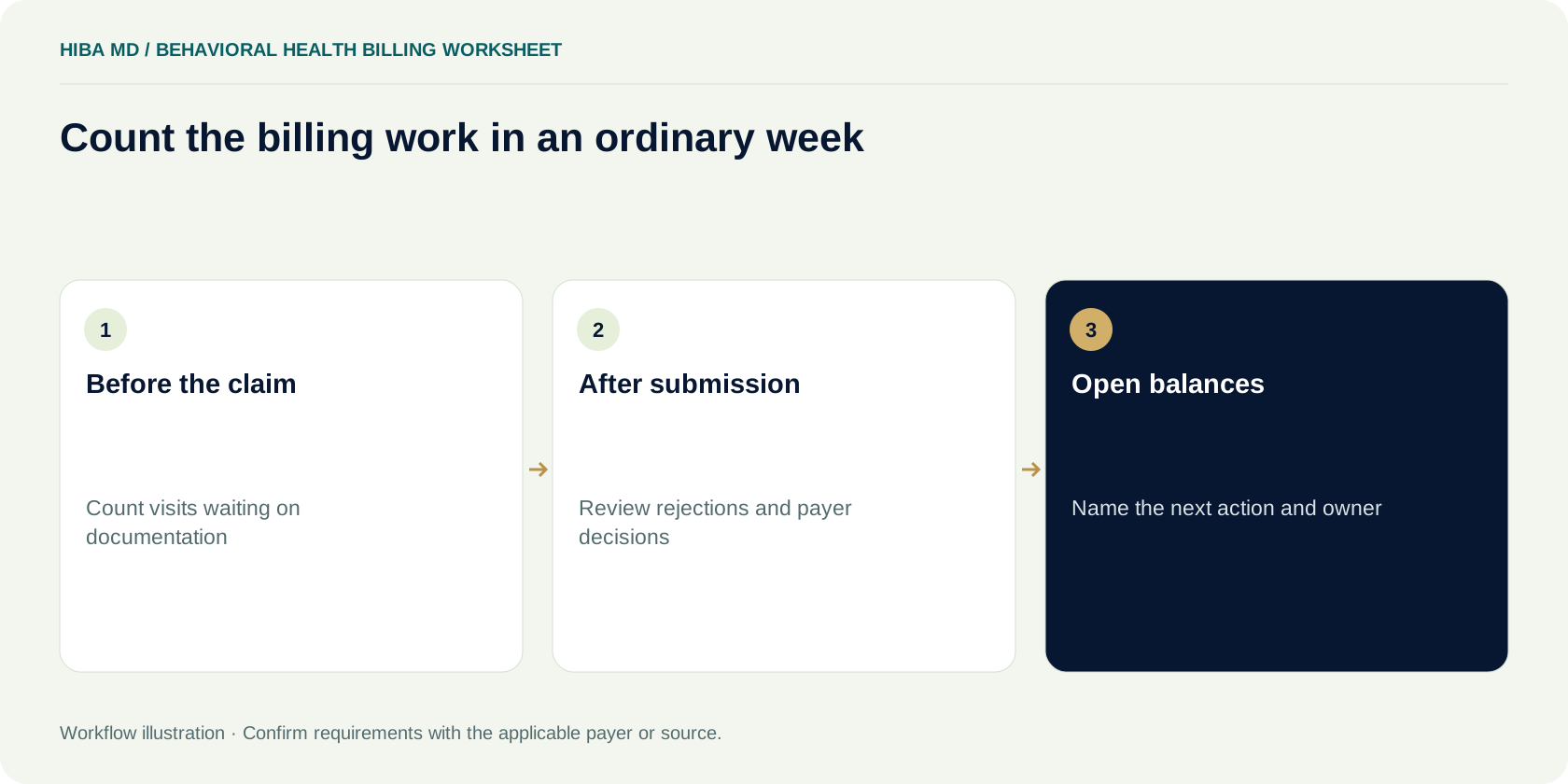
Open a week of work queues and follow several completed visits through the administrative steps. For an outpatient behavioral health practice, the work may begin with checking the plan and clinician before the first session. A visit can then wait on documentation, claim preparation, a submission response or a payer decision. Record the action people actually take at each stage and who answers when something goes wrong. A staff member who calls on unpaid claims may also be checking provider enrollment or tracking a change in authorization. Those hours need a place in the comparison.
Separate new visits from open work. The number of sessions scheduled next week tells you little about claims from three months ago. Pull an aggregate snapshot of unsigned notes awaiting review, rejected submissions, denials with upcoming deadlines and balances without a next action. For each queue, count the items using the same unit. If the denial report counts lines and the claim report counts whole claims, label the figures before discussing staffing or productivity. Use practice reports in the approved system and keep patient details out of vendor inquiries.
Ask the people doing the work which part consistently runs late. A week can look manageable until the one biller who knows a payer portal is away. Write down their backup and the steps the backup can complete today. Where no one can act, estimate the time or access needed to close the gap. That information is more useful for a vendor quote than a general request to “do billing.” It also shows where a focused change to an in-house team may solve the actual problem.
Use Colorado payer examples to test the scope
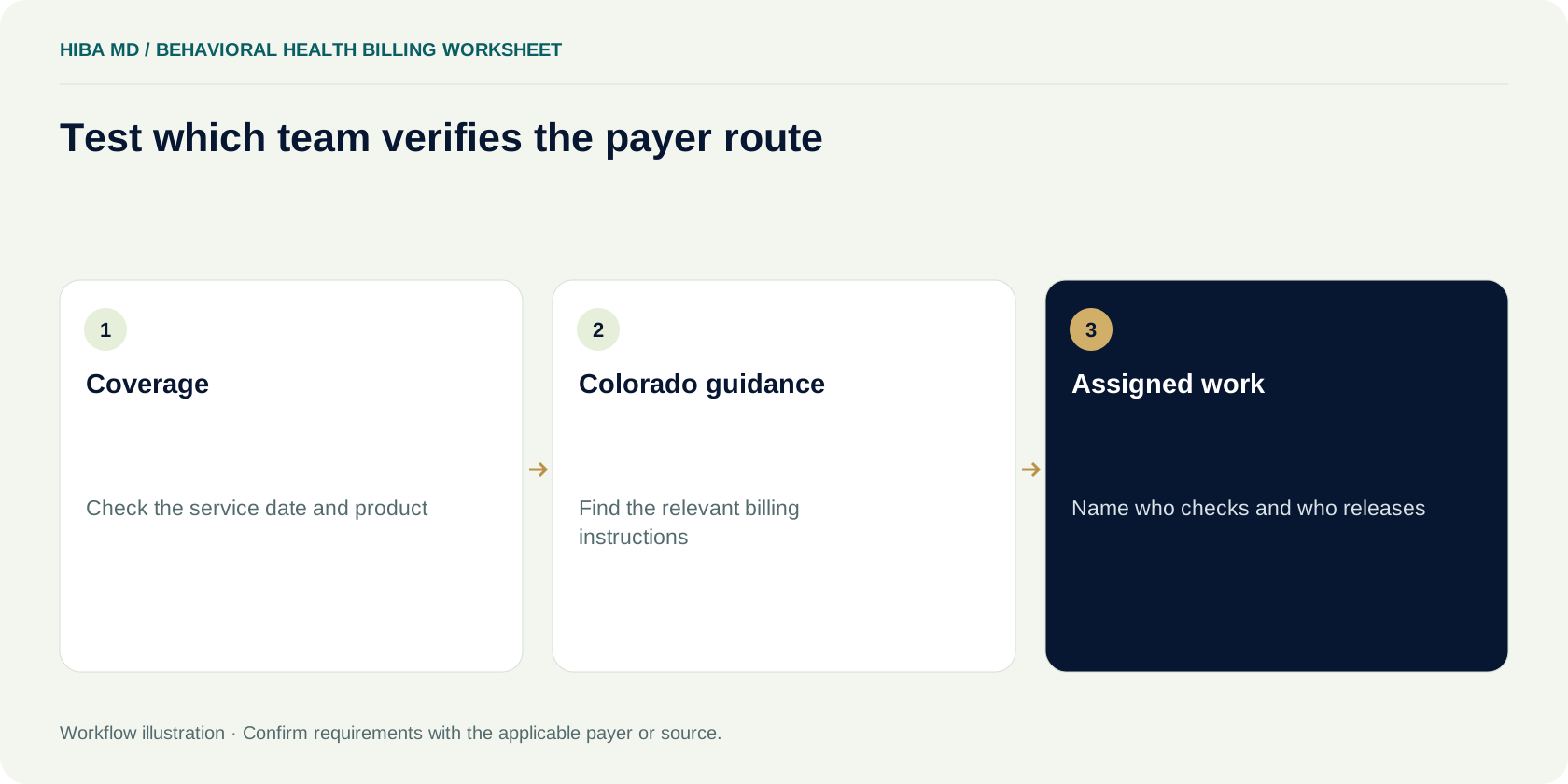
Health First Colorado publishes provider billing materials that distinguish its capitated behavioral health benefit from services handled under other billing guidance, including fee-for-service. For the practice's actual service, use the current Department of Health Care Policy and Financing material and confirm the applicable payer or regional entity instructions. The route can depend on the member and service. Give vendors the kinds of products and encounters your practice actually handles so their responses can describe the work they will perform.
For a training example, imagine that the same clinician sees two patients under different payer products in one afternoon. Ask the team to show how it verifies the responsible product on each service date, checks the clinician and billing entity, and records the evidence before release. For a Medicaid claim, ask which current Colorado source and which product-specific instructions it would consult. For a commercial plan, ask who maintains the plan instructions and how the practice will hear about a change. The reply should identify a person or role and a record the clinic can inspect.
Try a second example involving a recurring course of visits. A clinician changes locations and scheduling adds sessions next month. Ask who checks whether the existing approval applies to the new site, dates and service, and who tells scheduling what is still unresolved. If the proposal describes submission but excludes these checks, keep them on the practice side of the worksheet. The staff time to verify payer details still belongs in the cost comparison. Have the clinical team make care decisions and ask the billing team to document the administrative facts it can verify.
Compare the same scope on both sides
List what you want each model to cover. Include eligibility and authorization follow-up where applicable, charge review, submission, monitoring of acknowledgments, payment posting, denials, older balances and reporting. Beside each item, name the team that performs the task and the team that supplies the evidence. If a vendor agrees to submit claims but the practice still prepares charges and checks documentation, budget for those hours. If the in-house team already has system costs that will continue after outsourcing, put those costs in both scenarios.
Take a common example. The billing partner offers denial follow-up. Ask whether that includes identifying the payer response, routing a documentation request to the practice, filing an appropriate review when in scope, and following up until the payer responds. One quote may include all of that. Another may end after the initial inquiry. In the worksheet, separate ownership of the queue from authority to make a particular decision. The practice may retain approval for a write-off, patient balance change or release of a record even when the vendor handles routine follow-up.
If a vendor proposes a phased rollout, describe the scope for each phase. The practice might run its existing follow-up queue while the vendor handles new submissions during the first month. Count both responsibilities during the overlap. Identify what evidence will allow the practice to move a queue to the vendor, and how staff will confirm that the old queue still has an owner. Before comparing prices, give every vendor the same service description and ask them to list exclusions in writing.
Work through a monthly cost worksheet
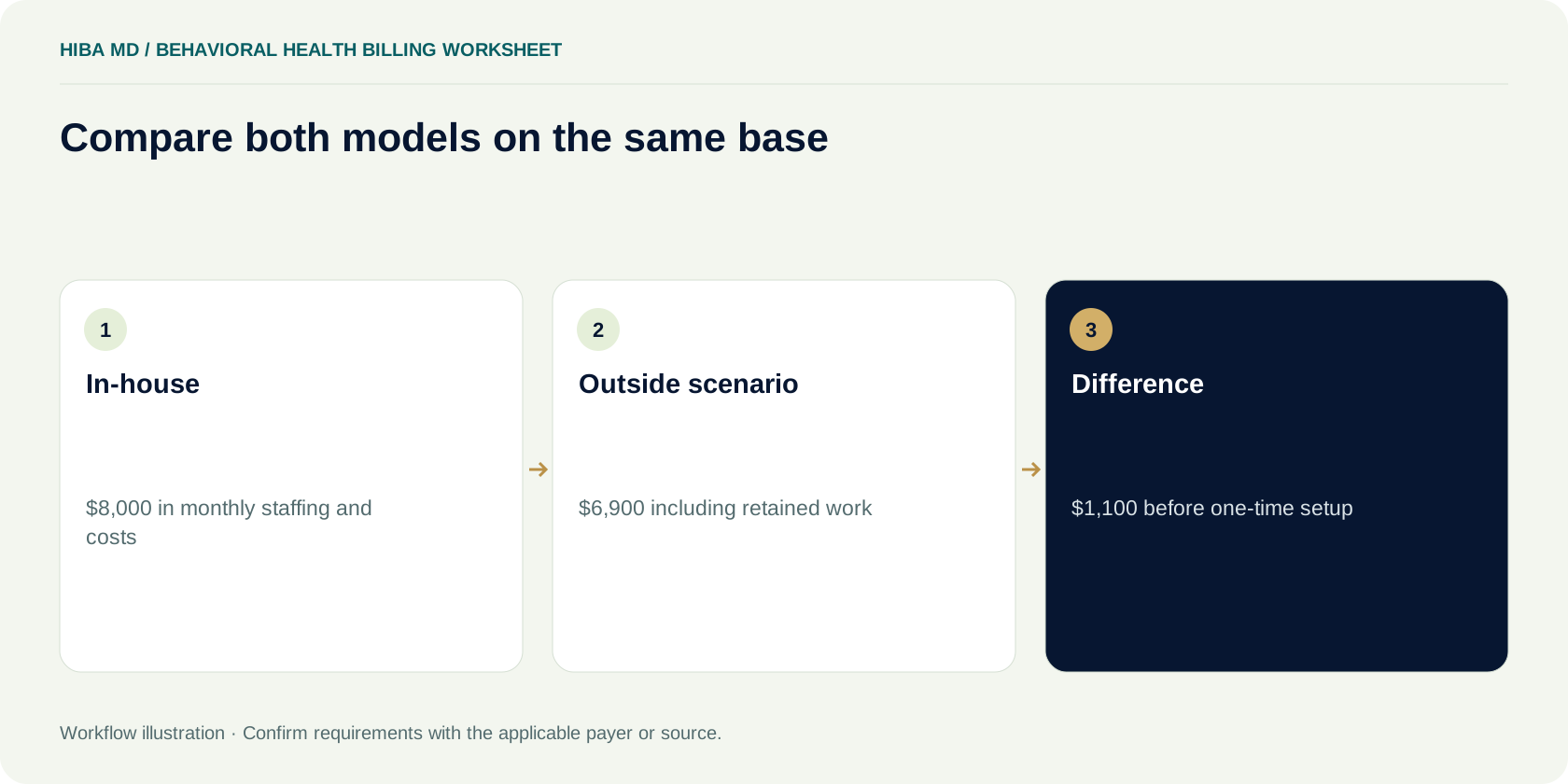
Suppose a fictional four-clinician practice collects $90,000 per month. Its internal billing cost is $6,400 for staff time including payroll costs, $700 for billing systems and clearinghouse fees, and $900 for part-time coverage and management review. The total is $8,000. These are illustrative figures. In a real worksheet, calculate staff and management time from a period the practice can reproduce and record which people and expenses are included.
A hypothetical outside quote applies 5.5% to the entire $90,000 collection base, which is $4,950. It adds a fixed monthly charge of $350. The clinic expects to keep $1,200 of staff time for documentation follow-up and internal oversight, plus $400 in software costs. The comparable outside scenario comes to $6,900 per month. The difference is $1,100 under those assumptions. If there is a $1,800 setup charge, include it in the initial period. Over six months, the simple difference would be $4,800 after that one-time charge, assuming the same recurring costs and collections.
Check which dollars count in the fee base. A quote might define its base differently for old accounts, patient payments or receipts that arrive after the engagement ends. Use the same definition when you enter the scenario and ask about how refunds, reversals or credits are handled. If the proposal excludes coding support or adds a separate fee for legacy balances, price those tasks separately. Repeat the worksheet with a lower collections month, a higher month and a month that needs more internal coverage. Document the inputs so a reviewer can see why the results moved.
Keep quality and cash timing separate from the cost model. The arithmetic estimates expenses at an assumed level of collections. Use a separate review to see whether work is completed on time, whether accounts can be traced, and whether a transition could delay deposits. A practice may be willing to spend more for reliable coverage during staff absences. It can weigh that choice once it has a written comparison of both costs and obligations.
Test the price when collections change
In the worksheet, the outside scenario has $1,950 in fixed and retained monthly costs before the percentage fee. If collections rise to $110,000 and the internal cost stays at $8,000, the assumed 5.5% fee becomes $6,050. Adding the $1,950 puts the two monthly costs at $8,000 before setup costs. At $75,000 in collections, the outside scenario would cost $6,075 under the same assumptions. Those figures help the practice see which volume range it should discuss with a vendor.
Check the assumption that the in-house cost stays flat. An increase in receipts might come from payments on work already completed, or it might follow an increase in visits that also raises staffing needs. In the first situation, an internal cost may stay close to its earlier figure. In the second, paid hours, clearinghouse volume and backup coverage may change. Model the actual work in each case. Ask the finance lead which costs move with visits and which move with receipts, then mark the source in the worksheet.
Have the vendor price the same examples using the proposal's written collection base and any minimum fees. Ask for the cost of a slower month and for a month with a large payment on transferred A/R. If the fee changes at a threshold, ask how it applies to the receipts on each side. Record who confirmed the interpretation and what information the practice still needs. A six-month comparison is easier to explain when the team can trace the fee in every month.

Decide who owns unresolved balances
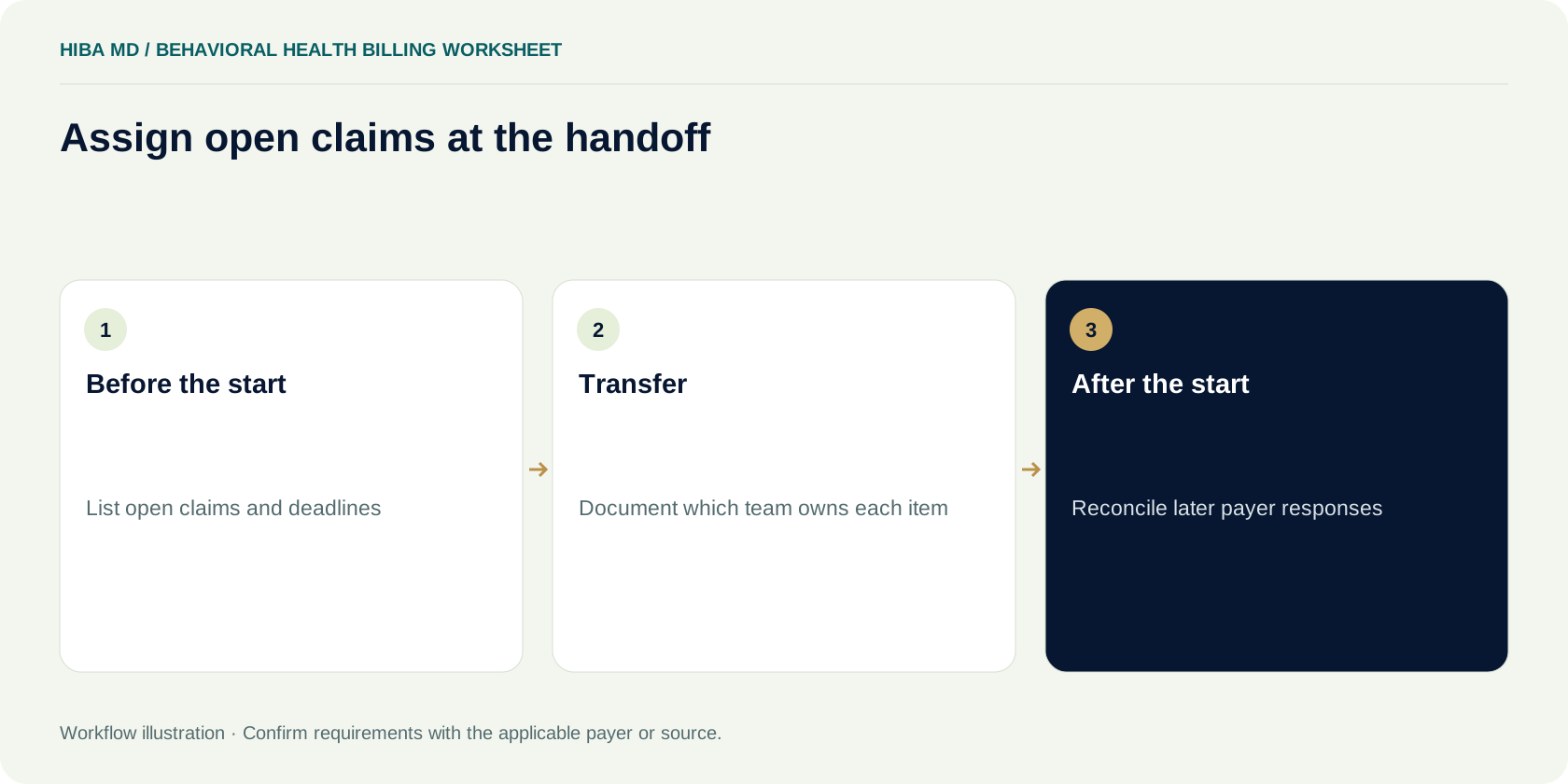
Pull a dated A/R snapshot and agree what goes with the new arrangement. A balance can have a payment pending, an appeal in progress or a question about the responsible payer. Age alone cannot tell a reviewer which step to take. Group the open work by last verified event and next action. Flag accounts with a deadline, unresolved posting differences, or records waiting for a clinician. Share aggregate counts during a proposal discussion. Exchange account-level evidence only through approved channels once access and agreements are in place.
If a new vendor starts December 1, ask how it handles a November encounter whose payer response arrives in December. Write the rule in terms the team can apply. It could be based on date of service, date of submission or an explicit list of transferred accounts. Confirm who reviews remittances that contain a mix of older and newer claims, and who owns a correction on a claim originally filed by the prior team. Have staff rehearse the rule on a fictional mixed batch before go-live.
Agree how to reconcile adjustments after an account moves. If the prior team posted a partial payment and the new team receives a reversal or replacement, the history needs to stay readable. Keep the original reference, last verified response and owner accessible. A weekly report can show how many transferred accounts have a next action, which ones are waiting for information and which are resolved. Specify what resolved means before counting it. An adjusted account, a paid claim and an item returned to the practice can each be legitimate outcomes with different explanations.
Keep documentation and access with the right people
Behavioral health claims depend on records created in the clinical workflow. Write down how the billing team requests clarification without asking it to change the clinical facts. For example, a reviewer might flag that a visit appears in the schedule without a final note or that two records show different dates. The clinician or authorized practice reviewer confirms the source. The biller records the approved resolution and keeps a clear claim trail. Decide what stays on hold while that question is open and who reviews approaching filing dates.
For a HIPAA-covered practice, HHS identifies billing and claims processing as activities that can involve a business associate when performed on its behalf with protected health information. Review the applicable written agreement and safeguards with the practice's privacy lead or qualified counsel before access is granted. HHS's business associate resources explain the purposes and protections a contract addresses. Match the agreement to the proposed workflows, including any subcontractor access, and keep the scope of each account aligned with its role.
Use the clinic's approved methods for access and secure exchange. Ask which system will hold the authoritative record, how new staff will be approved, and who removes access when their role changes. Start with a fictional claim example for a sales or onboarding conversation. If actual records are required later, the practice can arrange the approved process with the people responsible for access. Agree how records will be returned or handled at termination under applicable agreements and requirements. Confirm that the practice can retrieve needed work history as part of the exit plan.
Ask for evidence you can review every week
Use a sample report to check whether a proposal describes real operating work. A headline denial rate can be hard to use if the report never shows which denominator was used or whether replacements were counted. Ask how the vendor defines an adjudicated claim and how it records partial denials. If your in-house report uses a different definition, either agree on one for the comparison or keep both measures clearly labeled. Verify a few sample rows against the underlying evidence in the approved system once work begins.
Require the weekly exception report to show a status, owner and next action. For a missing authorization, the record may need the dates the payer approved and a contact in the practice who can confirm the schedule. For a rejection, the useful event may be the date a corrected submission reached the payer. For an unexplained variance, the reviewer may need the remittance and the estimate used to identify the difference. The report should point to the evidence and name who will act.
Set expectations for how an urgent issue is escalated. A disputed payer response with an approaching filing date should reach an owner before the normal meeting. Ask how the team records the notice, checks the controlling source and confirms receipt when action is sent. Use the same expectations for an internal team. Check the report against an actual queue at the next meeting. Choose a small set of measures the practice can reconcile regularly.
Pilot the handoff with a limited set of work
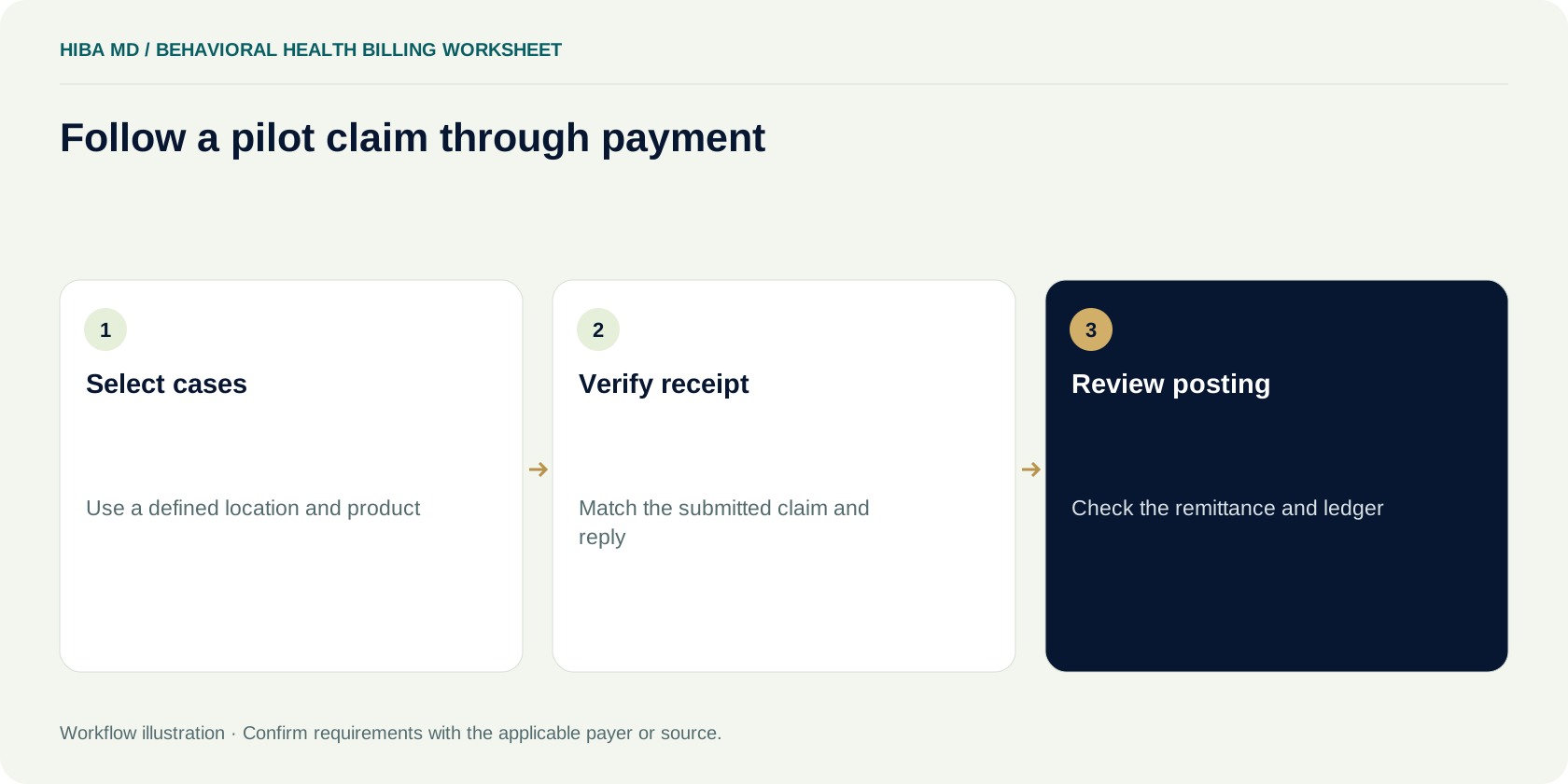
Choose a pilot cohort that the practice can review closely. For example, begin with new visits for one location and a defined group of payer products. Confirm in advance who handles the other work and how to route a patient question. Have the clinic and billing team write down which encounters belong to the pilot. Give the same dated cohort definition to both teams before they begin submitting.
Follow several cases through the full path. Compare the encounter record with the outbound claim, confirm its receipt, and check the first adjudication and posting. Include an exception that needs a documentation reply and a case that requires payer follow-up. Give the team a date to review the results and a way to pause release for one combination if the setup is wrong. A working pilot record shows what the practice observed and what still needs attention before expansion.
Ask the staff member who will run the regular meeting to trace one case independently. They should be able to explain who furnished the service, what happened at submission, what the payer said and who owns the next task. If they cannot locate the response or the group assignment, fix the handoff before opening another cohort. Keep a list of changes made during the pilot and assign a person to verify each one on the next batch. Document who approves expansion and which workflows still need a separate test.
Compare a hybrid arrangement
A practice may have a strong registrar and clinician documentation process but limited staff for denied and older claims. It can keep intake and documentation questions internal while assigning a defined follow-up queue outside. Another team may keep charge review and denial decisions in-house while outsourcing submission monitoring and posting. Compare the cost and handoffs of the specific arrangement. A vendor scope that names each queue can be compared more fairly with an internal role description.
Look for places where a hybrid adds another handoff. If the internal team creates claims and the vendor handles rejections, decide where the rejection record appears and who can correct the underlying field. If the vendor posts payments while the practice issues patient statements, agree which events the posting team must flag before a statement run. A combination can work when each team knows which facts it can change, which approvals it needs and how to pass an exception to the other side.
Use the same dated worksheet for all three models. Assign a lead for each queue, list retained costs, and note the first decision you would need to make if the plan falls behind. A practice that cannot hire backup coverage may value a team with a documented backup. A practice that has stable staff but wants to work a backlog may need a narrower engagement. Write down the reason for the choice so the practice can review it after the first month using the work and costs it observed.
Ask both teams how they will handle a vacation week. Give them one example with a missing payer response and one with a documentation query due the next day. Have them explain who can find the response, who can contact the clinician and which work the backup can release. Record the answers in the scope worksheet. If the backup can open the queue but cannot access the payer response, assign someone who can retrieve it through the approved channel. Review this coverage before the first holiday or planned absence. The exercise can also show whether the current team's issue is a missing permission or handoff, which may be cheaper to solve than adding another position.
Make the request for proposal specific enough to compare
Give each vendor the same description of the practice, the payer categories in scope and aggregate workload. Ask what the vendor does when an authorization changes, a claim lacks documentation or a payment response does not reconcile. Request a sample report and a sample transition plan that identify roles. Ask who handles patient questions, which systems require access and what the practice will be able to download. The Hiba MD RFP template gives the team a place to record scope, fees, reporting and transition questions.
At the review meeting, give bidders the same fictional case. An outpatient clinician has a newly approved location, but a recurring visit was already scheduled under the old arrangement. Ask the vendor to describe how its team would verify the date, provider and payer route, then send an unresolved issue back to the practice. Ask which tasks are included in the proposed quote and which are excluded. Record the response beside the price. A short exercise can show whether the teams are agreeing to the same workflow.
For a final review, ask how the practice can end or change the arrangement and continue working open claims. Check who provides exports, when access changes and how outstanding reports, appeal references and payment batches are handed over. Keep the agreed definitions and contacts available to the people doing the work. After the first month, review the cost worksheet against the actual work and correct any assumption that did not hold. Use that record to decide whether the arrangement needs a scope change or a change to the internal handoff.
Frequently asked questions
Is a percentage billing fee enough to compare a quote with payroll?
Add fixed and setup fees, retained internal work, tools and any separately priced queues. Confirm what counts in the percentage base.
Can we outsource denials and keep submission in-house?
Define the queue, how the vendor receives payer responses, who supplies documentation and who approves the next action. Give both teams the same deadline and tracking definitions.
What should Colorado Medicaid providers check before handing off billing?
Confirm the member's product, service, rendering clinician and billing entity. Review current Health First Colorado guidance and the applicable payer or regional entity instructions.
Who should own old claims when the vendor starts?
Write a dated transfer rule and identify the owner for pending claims, future remittances and open appeals. Rehearse the rule with a fictional mixed batch.
When should a practice share real records with a vendor?
Discuss scope and workload with aggregate or fictional data first. Use the applicable agreements and approved record exchange when access is required.
What is a practical first-month review?
Reconcile a small group of cases through submission, adjudication and posting. Review the exception queue, backup coverage and actual retained costs before expanding.
Sources and editorial notes
Written by the Hiba MD editorial team. Reviewed 2026-11-14. Worked examples use illustrative figures, not client results or performance benchmarks. This guide explains administrative workflows; check current payer requirements for claim-specific decisions.
